
SHARE
American interior design has always reflected the evolving identity of this nation-bold, diverse, and deeply personal. At Etch Design Group, we've spent years translating the rich traditions of american interior design into spaces that feel both timeless and unmistakably contemporary. From Spanish Hacienda estates in the Texas Hill Country to sleek Mid-Century Modern remodels in central Austin, we understand that the most meaningful interiors honor regional heritage while serving the complex needs of modern living. This approach defines how we work with clients planning transformative residential and commercial projects across Austin and beyond. If you're ready to explore how intentional design can elevate your next project, we invite you to schedule a complimentary discovery call with our team.
Key Takeaways
- American interior design blends diverse regional influences, from Colonial Revival to contemporary minimalism, creating spaces that reflect personal and cultural identity
- Successful high-end residential projects require early collaboration among designers, architects, and builders to ensure cohesive results
- Material authenticity and craftsmanship define quality american interior design, prioritizing longevity over trends
- Commercial spaces benefit from design strategies that balance brand expression with operational functionality
- Austin's unique architectural landscape offers opportunities to merge traditional american design elements with modern innovation
- Strategic space planning and finish selection transform both new construction and remodel projects into legacy environments
The Evolution of American Interior Design Through Regional Lenses
American interior design has never existed as a monolithic style. Instead, it represents a tapestry of regional expressions, each shaped by climate, available materials, cultural influences, and historical context. According to research from the New York Public Library, american interior design theory has evolved dramatically from Colonial-era formality through Victorian opulence, Arts and Crafts authenticity, and modernist simplification.
We see this evolution reflected in Austin's architectural diversity. The city's design vocabulary includes everything from limestone-clad Hill Country estates to glass-and-steel contemporary structures. Each requires a distinct interior approach that honors its architectural intent while meeting contemporary performance standards.
Understanding Regional American Design Languages
Different regions developed signature interior approaches based on local conditions:
- Southern Traditional: Emphasizes formal symmetry, rich wood tones, plantation shutters, and generous hospitality spaces
- Southwestern Adobe: Features thick walls, exposed vigas, earth-toned palettes, and handcrafted tile work
- Coastal Contemporary: Prioritizes natural light, neutral palettes, durable materials, and indoor-outdoor connections
- Mid-Century Modern: Celebrates clean lines, organic forms, mixed materials, and integrated indoor-outdoor living
Each of these traditions informs how we approach projects today. A two-story library in a Spanish Hacienda-style new build demands entirely different detailing than a minimalist downtown loft remodel, yet both can embody authentic american interior design principles.
Material Authenticity and Craftsmanship in High-End Residential Projects
The foundation of exceptional american interior design lies in material selection and craft quality. We've observed that clients investing $500K or more in residential projects increasingly prioritize authenticity over imitation-seeking reclaimed wood beams rather than faux finishes, hand-plastered walls instead of synthetic alternatives, and custom millwork over production cabinetry.
This shift reflects broader cultural values around sustainability and permanence. When we design a multi-generational home, we're creating an environment that must serve multiple life stages and eventually transfer to future owners. The materials we specify today determine whether that space feels dated in a decade or remains compelling for generations.
| Material Category | Production Option | Authentic Alternative | Longevity Difference |
|---|---|---|---|
| Flooring | Laminate "wood" | Solid hardwood or reclaimed timber | 10 years vs. 50+ years |
| Countertops | Laminate | Natural stone or engineered quartz | 7 years vs. 25+ years |
| Cabinetry | Stock particleboard | Custom solid wood construction | 15 years vs. lifetime |
| Tile | Printed ceramic | Hand-glazed artisan tile | 20 years vs. 100+ years |
Our residential remodel projects demonstrate how material investment transforms ordinary renovations into legacy spaces.
The Role of Local Craftsmanship
American interior design traditions have always celebrated regional craft specialties. In Austin, this means partnering with artisans who understand local limestone, working with metalworkers who can execute custom lighting fixtures, and collaborating with woodworkers familiar with Texas hardwoods.
Spatial Planning Principles That Define American Interiors
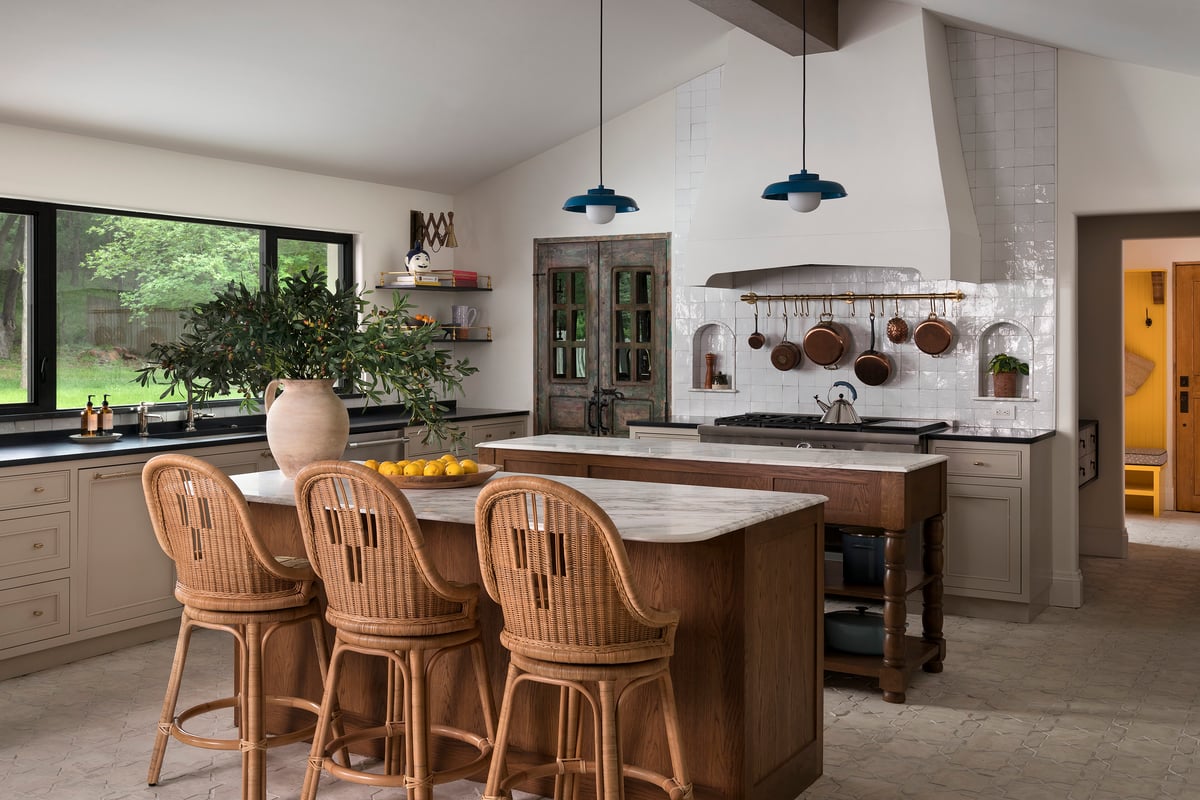
Unlike European design traditions that often work within fixed historical structures, american interior design has historically embraced spatial flexibility and generous proportions. This reflects the nation's expansion-era mindset and abundance of building land, particularly in regions like Texas.
We approach spatial planning through several core principles:
- Flow and circulation patterns that support daily routines without friction
- Proportional room sizing that balances intimacy with grandeur
- Sight lines that create visual connections across spaces
- Transitional zones that mediate between public and private areas
- Multi-functional spaces that adapt to changing needs over time
Open Concept vs. Defined Rooms
The open-concept layout became synonymous with american interior design in the late 20th century, particularly in new construction. However, we're observing a thoughtful recalibration in 2026. Clients now seek defined spaces that offer acoustic privacy and visual retreat while maintaining selective openness for gathering and entertaining.
This evolution appears prominently in our new build projects. Rather than completely open great rooms, we're designing spaces with varied ceiling heights, partial walls, architectural columns, and strategic furniture placement that creates zones without isolation. The result feels distinctly American-informal and welcoming, yet sophisticated and intentional.
The Intersection of American Design and Commercial Interiors
While residential projects often receive the spotlight in discussions of american interior design, commercial spaces tell equally compelling stories about how Americans work, gather, and conduct business. From hotel lobbies that welcome travelers to office environments that foster innovation, commercial interiors shape daily experiences for millions.
We approach commercial projects with the same commitment to authenticity that guides our residential work. A hospitality space in downtown Austin benefits from design decisions that reference Texas heritage-perhaps through reclaimed barn wood accents or custom lighting inspired by ranch lanterns-while meeting the operational demands of a busy restaurant or boutique hotel.
Key considerations for commercial american interior design include:
- Brand identity expression through material palette and spatial layout
- Durability requirements that exceed residential specifications
- ADA compliance integrated seamlessly into the aesthetic
- Operational workflow optimization that supports staff efficiency
- Flexibility for future adaptation as business needs evolve
The Designer Society of America resources provide valuable industry perspectives on commercial design standards.
The Collaboration Model: Architects, Builders, and Interior Designers
One defining characteristic of successful american interior design projects-particularly at the high-end residential and commercial scale-is early and ongoing collaboration among the project team. We've found that the most cohesive results emerge when interior designers engage during architectural programming, not after construction documents are complete.
This collaborative model allows us to influence decisions that dramatically impact interior quality:
- Window placement and sizing that optimizes natural light
- Ceiling height variations that create spatial hierarchy
- Structural elements positioned to support furniture arrangements
- Electrical and plumbing rough-ins that accommodate design intent
- Millwork integration with architectural details
Our new construction design process embeds our team early in project timelines, ensuring architectural and interior decisions support each other rather than compete.
Builder Relationships and Construction Quality
The execution quality of american interior design depends entirely on the builder's skill and attention to detail. We've developed long-standing relationships with Austin-area builders who understand that luxury projects demand precision installation, careful material handling, and proactive problem-solving.
These partnerships prove particularly valuable during the finish phase, when minor installation errors can undermine months of design refinement. A custom plaster fireplace surround or book-matched marble installation requires craftspeople who take pride in their work and understand the design intent behind each specification.
Color, Pattern, and Texture in Contemporary American Spaces
American interior design has historically embraced bold color and pattern more readily than many European traditions. From the vibrant wallpapers of Victorian parlors to the earth-toned palettes of Southwest adobe homes, color serves as a primary tool for establishing mood and character.
In 2026, we're observing sophisticated color strategies that layer neutrals with strategic accent moments. Rather than the monochromatic white-on-white aesthetic that dominated the 2010s, today's high-end american interior design incorporates:
- Warm neutrals with complex undertones (greige, warm white, soft taupe)
- Natural material colors that bring organic variation
- Strategic accent colors drawn from art, textiles, or landscape views
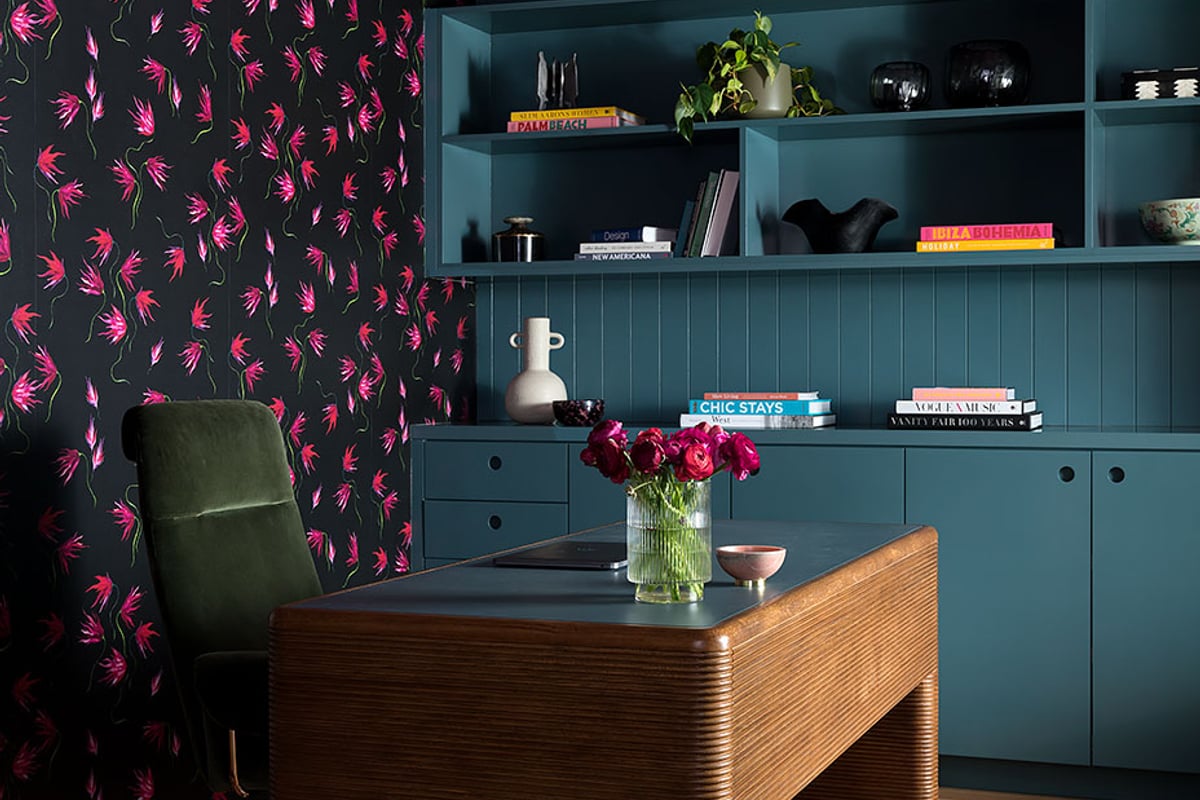
- Pattern mixing across scales (large-format wallcovering, medium textiles, small-scale details)
- Textural contrast that creates visual interest within neutral palettes
Designers like Sheila Bridges have demonstrated how pattern innovation can define a career, creating signature designs that become synonymous with contemporary american interior design excellence.
Furnishing Strategies That Complete the Vision
Architecture and finishes establish the container, but furnishings transform a house into a home or a commercial shell into a branded environment. We approach furnishings as the final layer of storytelling, where personality and function converge.
The Mix of Custom and Vintage
Authentic american interior design often celebrates the mix-combining custom pieces designed specifically for a space with vintage finds that bring history and character. A new build in Westlake might feature:
- Custom sofas proportioned exactly for the great room
- Vintage Moroccan rugs that add pattern and warmth
- Contemporary art commissioned from local Austin artists
- Antique side tables inherited from family
- Modern lighting fixtures that anchor the composition
This layered approach creates depth that feels collected over time rather than purchased all at once. It also allows budgets to flex strategically, investing heavily in pieces that receive daily use while sourcing vintage accessories more economically.
Our furnishings and styling services guide clients through this complex process, ensuring every piece contributes to the overall vision.
Lighting Design as Infrastructure and Art
Lighting represents one of the most under-appreciated elements of american interior design, yet it fundamentally determines how spaces feel and function. We approach lighting as a layered system that serves multiple purposes simultaneously.
Effective residential lighting design includes:
- Ambient lighting that provides overall illumination through recessed fixtures, pendants, or chandeliers
- Task lighting for specific activities like reading, cooking, or working
- Accent lighting that highlights art, architecture, or collections
- Decorative lighting that serves as jewelry for the space
- Natural light management through window treatments and architectural features
The quality and color temperature of light sources dramatically affects material perception. The same limestone that glows warmly under 2700K lighting appears cold under 4000K sources. We specify lighting fixtures and lamps with the same care we apply to finish materials, understanding that poor lighting undermines even the most thoughtful design decisions.
Sustainability and Longevity in American Design Practice
Contemporary american interior design increasingly prioritizes environmental responsibility without sacrificing aesthetic quality. This represents a significant evolution from earlier eras when sustainability often meant compromise.
We integrate sustainable practices through several strategies:
- Material selection favoring rapidly renewable, reclaimed, or locally sourced options
- Durability specifications that extend product lifecycles and reduce replacement cycles
- Energy efficiency through window treatments, lighting systems, and HVAC coordination
- Indoor air quality via low-VOC finishes, natural materials, and ventilation design
- Timeless design that resists trend-driven obsolescence
According to academic research resources, sustainability has transitioned from niche concern to core practice across the interior design profession.
The most sustainable design decision we can make is creating spaces our clients will love for decades, eliminating the impulse to renovate simply because a space feels dated.
The Investment Framework for High-End Projects
Clients investing in transformative residential or commercial interior design projects need transparent guidance about budget allocation and value creation. We've developed a framework that helps clients understand where investment creates the greatest impact.
| Budget Category | Typical Allocation | Impact on Final Result | Longevity Consideration |
|---|---|---|---|
| Architecture & Engineering | 8-12% of construction | Foundation for everything | Permanent |
| Finishes & Materials | 25-35% of construction | Primary aesthetic impact | 15-30+ years |
| Furnishings & Window Treatments | 15-25% of construction | Personality and comfort | 10-20 years |
| Lighting Systems | 8-12% of construction | Transforms material perception | 15-25 years |
| Art & Accessories | 10-15% of construction | Final layer of personalization | Variable |
These percentages vary based on project type, but they provide a starting framework. A $500K project budget might allocate $125,000-175,000 to finishes and materials, ensuring quality that supports long-term satisfaction.
Designers like Thomas Pheasant have built careers demonstrating that investment in quality creates enduring value, both financially and experientially.
Navigating Style Within American Interior Design Traditions
When clients tell us they want "american interior design," they're often referring to specific style subsets within that broad category. Understanding these distinctions helps clarify vision and align expectations.
Contemporary American
Clean lines, neutral palettes, emphasis on space and light, minimal ornamentation, and high-quality materials speaking for themselves. This style dominates new construction in urban Austin neighborhoods.
Traditional American
Formal symmetry, rich wood tones, layered window treatments, classic furniture silhouettes, and decorative details that reference historical periods. Popular in established neighborhoods and estate properties.
Transitional American
The sweet spot where contemporary simplicity meets traditional warmth. Clean architectural backgrounds with comfortable furnishings, mixed materials, and restrained pattern use. This remains the most requested style across our portfolio of work.
Regional American
Designs that celebrate specific geographic identities-Texas Hill Country, Coastal, Mountain, Desert. These styles incorporate local materials, respond to climate, and reference regional building traditions.
We help clients articulate which direction resonates with their lifestyle and values, then execute that vision with consistency and refinement.
Process and Timeline Realities for Transformative Projects
Understanding realistic timelines prevents frustration and allows proper planning for american interior design projects at the scale we typically undertake.
Typical timeline for a new construction residential project:
- Programming and conceptual design (6-10 weeks)
- Design development and selections (8-12 weeks)
- Construction documentation (4-6 weeks)
- Construction (12-18 months for custom homes)
- Furnishings procurement and installation (12-20 weeks)
Total timeline: 24-36 months from initial consultation to move-in.
Typical timeline for a major residential remodel:
- Assessment and design development (6-8 weeks)
- Selection and documentation (6-8 weeks)
- Permitting (varies widely, 4-12 weeks in Austin)
- Construction (6-12 months depending on scope)
- Furnishings and installation (10-16 weeks)
Total timeline: 18-24 months from engagement to completion.
These timelines reflect the reality of quality work. Resources like The Franklin Report confirm that rushing premium projects compromises results and often costs more through change orders and corrections.
Emerging Directions in American Interior Design
As we work through 2026, several trends are reshaping how american interior design evolves:
Wellness-focused design goes beyond aesthetics to support physical and mental health through air quality, circadian lighting, biophilic elements, and spaces for movement and meditation.
Technology integration becomes increasingly invisible, with systems embedded seamlessly rather than featured prominently. Smart home capabilities serve convenience without dominating the visual experience.
Craft renaissance continues growing as clients value handmade elements, supporting local artisans and incorporating one-of-a-kind pieces that mass production cannot replicate.
Flexible spaces adapt to changing needs, whether accommodating multi-generational living, work-from-home requirements, or evolving entertainment preferences.
These directions don't represent fleeting trends but rather fundamental shifts in how Americans think about their environments and what they expect interior design to deliver.
At Etch Design Group, we've watched these evolutions unfold across hundreds of projects, always filtering new ideas through the lens of timeless quality.
The Residential-Commercial Crossover
Increasingly, we're seeing design approaches migrate between residential and commercial contexts. Hospitality design borrows residential warmth and comfort. Home offices adopt commercial-grade task lighting and ergonomic furniture. This crossover reflects blurring boundaries between how Americans live and work.
Our commercial projects benefit from residential design thinking-creating branded environments that still feel welcoming and human-scaled. Conversely, our residential clients often appreciate commercial durability standards for high-traffic areas or multi-functional spaces that serve semi-public purposes.
This fluidity represents an evolution in american interior design practice, moving beyond rigid categorical thinking toward solutions-based creativity that prioritizes function and feeling over style labels.
American interior design continues evolving as a reflection of how we live, work, and express identity through our environments. The most successful projects balance regional authenticity with contemporary performance, honoring tradition while embracing innovation. Whether you're planning a new construction home that will serve your family for generations or reimagining a commercial space that tells your brand story, the right design partner transforms vision into lasting reality. At Etch Design Group, we bring decades of combined experience to every project, creating spaces that don't just look beautiful-they become legacies.