
SHARE
Hiring interior designer services represents one of the most strategic investments you can make in a high-end residential or commercial project. Over the past decade, we've worked with hundreds of Austin homeowners and developers who initially approached the design process with uncertainty about what to expect, how to evaluate talent, and when to bring a professional team into the conversation. The difference between hiring a skilled design firm and attempting to navigate complex spatial decisions alone often becomes the difference between a home that appreciates in value and one that feels disjointed despite a substantial budget.
Key Takeaways
- Engage a design team during pre-construction or early planning stages to maximize value and prevent costly revisions
- Evaluate portfolios for projects similar in scale, architectural style, and budget to your vision
- Understand fee structures: hourly, flat-fee, percentage-based, and hybrid models each serve different project types
- Request detailed process documentation including timelines, decision points, and team communication protocols
- Verify trade relationships and project management capabilities, not just aesthetic sensibility
- Plan for a 3-6 month design phase for new construction projects and 2-4 months for remodels before construction begins
Before you can make an informed decision about booking a complimentary discovery call, you need clarity on what separates exceptional design services from decorative consultation.
Understanding When Hiring Interior Designer Services Adds Value
The timing of hiring interior designer expertise fundamentally shapes project outcomes. We've consulted on projects where clients contacted us after framing was complete, only to discover that spatial proportions, ceiling heights, and window placements limited their design potential. The most successful collaborations begin during architectural planning.
Pre-Construction Engagement
For new builds and major renovations, design involvement during the schematic design phase prevents expensive change orders later. When we collaborate with architects from the beginning, we advocate for details that dramatically improve livability:
- Custom millwork dimensions that accommodate actual furniture scales
- Electrical and lighting layouts that support layered illumination strategies
- HVAC coordination that eliminates bulkheads in critical sight lines
- Plumbing locations that enable luxurious master bath configurations
Early engagement also establishes budget discipline. Rather than discovering that your tile selections exceed budget during construction, integrated design teams build realistic specifications from day one.
Remodel and Renovation Projects
Residential remodels demand a different evaluation sequence. Here, hiring interior designer services before demolition allows for strategic preservation of architectural elements worth retaining. We've saved clients significant costs by identifying which walls actually need removal and which can remain to support structural or design goals.
| Project Phase | Design Value Add | Cost Impact |
|---|---|---|
| Pre-Design | Space programming, feasibility studies | Prevents 15-30% budget overruns |
| Schematic Design | Architectural coordination, material strategy | Establishes realistic expectations |
| Design Development | Detailed specifications, custom elements | Ensures contractor bid accuracy |
| Construction Administration | On-site oversight, problem-solving | Protects design intent, timeline |
The question isn't whether hiring interior designer support adds value, but rather how much value you sacrifice by delaying engagement.
Evaluating Design Firms Beyond Portfolio Aesthetics
Beautiful photography reveals what a firm can do aesthetically, but provides limited insight into how they work. After managing complex projects across Austin's most demanding neighborhoods, we've identified the evaluation criteria that predict successful partnerships.
Process Documentation and Project Management
Request specific information about how the firm structures its workflow. Superior design teams provide:
- Detailed project timelines showing decision milestones and deliverable schedules
- Communication protocols defining response times and meeting cadences
- Document management systems for specifications, invoices, and change orders
- Quality control procedures for reviewing contractor work against drawings
When hiring interior designer professionals, you're not just buying taste-you're investing in organizational systems that keep multimillion-dollar projects on track. Understanding how to properly evaluate designers helps homeowners ask the right questions during initial consultations.
Trade Relationships and Resource Access
A design firm's vendor relationships directly impact your project budget and timeline. We maintain preferred partnerships with over 50 specialized trades and suppliers, which translates into:
- Access to to-the-trade-only showrooms with better pricing and exclusive products
- Priority fabrication schedules during busy construction seasons
- Reliable installation teams who understand design intent
- Warranty support and post-installation service
Ask potential firms about their trade network specificity. Generic statements about "great vendor relationships" matter less than demonstrated history with stone fabricators, custom millworkers, and upholstery artisans who can execute complex specifications.
Experience with Similar Project Typologies
Austin's architectural diversity-from Spanish Hacienda estates in Westlake to Mid-Century Modern renovations in Tarrytown-requires specialized knowledge. When hiring interior designer services, verify that the firm has completed projects matching your architectural style and scope.
We approach a 6,000-square-foot new construction in our portfolio differently than a 2,500-square-foot condo remodel. The design process, team structure, and budget allocation shift based on project typology.
Understanding Fee Structures and Budget Realities
Compensation models vary significantly across the industry, and each approach serves different client needs. Transparency about costs during the hiring interior designer process prevents misalignment later.
Common Fee Structures Explained
Hourly Billing: Typically ranges from $150-400 per hour for principal-level designers in Austin's luxury market. This model works well for consultation-only services or small-scope projects where total hours remain difficult to predict.
Flat-Fee Project Pricing: Design firms quote a fixed price based on project scope, square footage, and complexity. This approach provides budget certainty and aligns incentives-we're motivated to work efficiently while maintaining quality standards.
Percentage of Construction Cost: Some firms charge 10-20% of total construction value. While common for large commercial projects, this model can create misaligned incentives in residential work, potentially encouraging higher construction budgets.
Hybrid Models: Many high-end firms combine approaches, such as a flat design fee plus purchasing commissions on furnishings and materials. At Etch, we structure compensation to match project phases and deliverables.
| Fee Model | Best For | Typical Austin Range | Budget Predictability |
|---|---|---|---|
| Hourly | Consultations, small projects | $150-400/hour | Low |
| Flat Fee | Full-service design | $50K-250K+ | High |
| Percentage | Large commercial builds | 10-20% of construction | Medium |
| Hybrid | Comprehensive residential | Varies by project | High |
What's Included vs. What Costs Extra
Before hiring interior designer services, request an itemized scope of services document. Standard design fees typically cover:
- Initial consultation and site analysis
- Conceptual design and space planning
- Material and finish selections
- Furniture specifications and layouts
- Lighting design and electrical coordination
- Construction documentation
- Contractor coordination and site visits
Additional services that may incur separate fees:
- Procurement and purchasing (often includes markup or fee)
- Expediting and project management beyond standard oversight
- Travel for distant projects or specialized sourcing
- Revisions beyond agreed-upon rounds
- Post-installation styling and art placement
We believe in absolute clarity about what clients receive for their investment. Hidden fees and vague scope definitions erode trust and complicate the collaborative relationship essential to great design.
The Interview Process: Questions That Reveal Capabilities
The initial consultation when hiring interior designer talent should function as a mutual evaluation. We're assessing project fit as much as you're evaluating our capabilities. Here's how to structure productive conversations.
Portfolio Review with Specific Context
Rather than passively viewing completed projects, ask designers to explain their decision-making process for spaces similar to yours. When we present our work, we discuss not just what the space looks like, but why we made specific choices about proportion, material selection, and spatial flow.
Insightful questions include:
- What challenges did this project present and how did you solve them?
- How did you balance the client's initial vision with your professional recommendations?
- What would you do differently if you could repeat this project?
- How did you manage budget constraints while maintaining design integrity?
These questions reveal problem-solving capabilities and collaborative approach far better than admiring beautiful photography. Homes & Gardens’ guide on avoiding costly decorating mistakes underscores why professional guidance during critical decision points prevents regrettable choices.
Process and Timeline Discussions
Ask candidates to walk through their typical project timeline from contract signing to installation completion. For a new construction project in Austin's luxury market, realistic timelines include:
- Design Phase (3-6 months): Concept development, space planning, material selections, construction documentation
- Bidding and Contractor Selection (4-6 weeks): Reviewing contractor proposals, making recommendations
- Construction Phase (6-18 months): Regular site visits, contractor coordination, problem-solving
- Furnishing and Installation (2-4 months): Procurement, delivery coordination, styling
When professionals provide vague timelines or promise unrealistic schedules, consider it a warning sign. Quality design work requires adequate time for client feedback, revision cycles, and thoughtful decision-making.
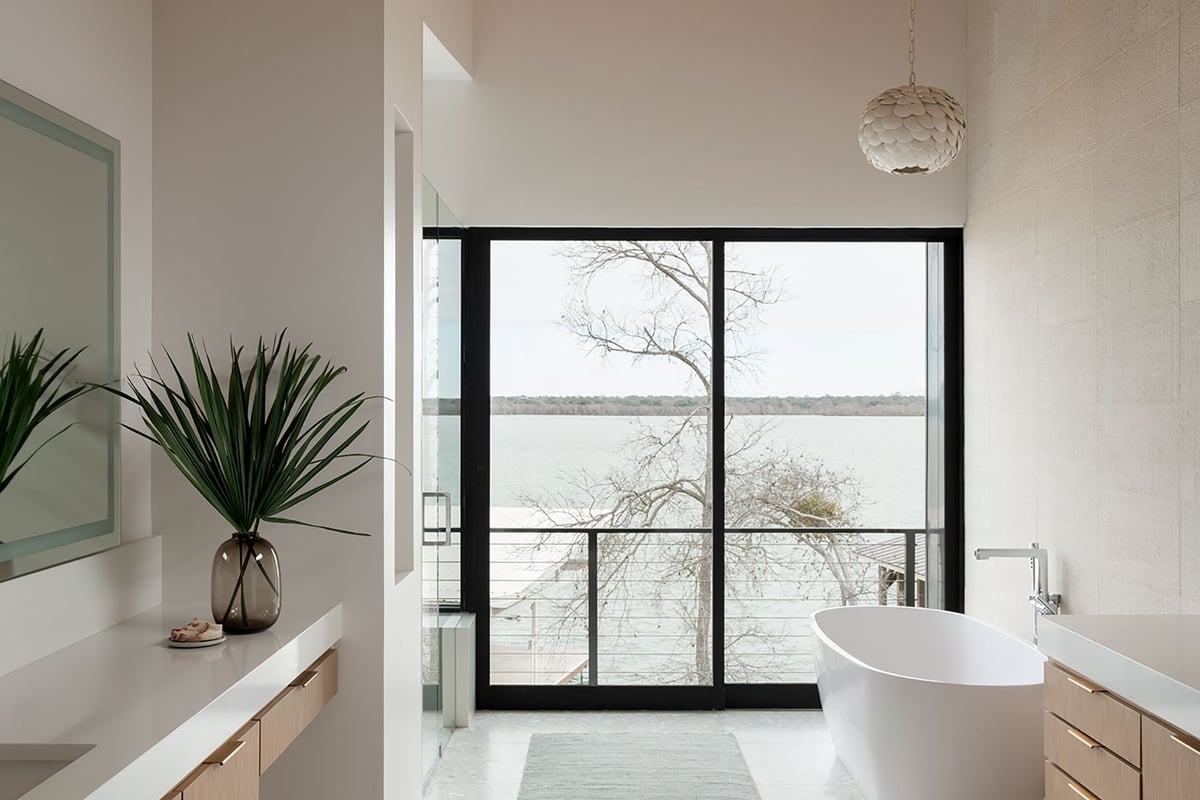
Our new construction design process demonstrates how proper sequencing ensures that every decision builds logically toward a cohesive result.
Team Structure and Communication
Understanding who will actually execute your project matters as much as the principal designer's portfolio. Ask about:
- Team composition and individual roles
- How senior leadership remains involved throughout the project
- Communication frequency and preferred channels
- Decision-making authority and approval processes
At Etch, clients work directly with our principals while benefiting from our talented team's specialized expertise in areas like lighting design, material specification, and procurement management. This structure ensures both strategic oversight and detailed execution.
Red Flags and Green Flags When Hiring Interior Designer Talent
Having collaborated with hundreds of homeowners, developers, and architects across Austin, we've observed patterns that predict project success or struggle. Recognizing these signals early protects your investment.
Warning Signs to Watch For
Reluctance to provide references or detailed contracts. Professional design firms welcome reference calls from past clients and provide comprehensive service agreements outlining scope, fees, timelines, and responsibilities. Vague commitments suggest operational immaturity.
Portfolio lacking projects at your budget or scale. A firm experienced with $200K remodels may struggle with the complexity of a $2M new build. Similarly, designers primarily focused on small-scale furnishing projects might lack the construction documentation skills essential for ground-up projects.
Dismissiveness toward your input or preferences. The best design relationships balance professional expertise with client vision. When designers seem uninterested in understanding your lifestyle, aesthetic preferences, or functional requirements, collaboration becomes adversarial rather than generative.
Inability to articulate process or methodology. Monster’s hiring guide for interior designers emphasizes evaluating systematic approaches to complex projects. Talented designers should clearly explain how they move from concept to completion.
Positive Indicators of Strong Partnerships
- Thoughtful questions about how you live: Great designers probe beyond surface aesthetics to understand daily routines, entertaining patterns, storage needs, and long-term lifestyle goals
- Transparent budget discussions: Professionals help you understand realistic cost implications of different design directions rather than promising everything within unrealistic budgets
- Collaborative approach with builders and architects: Design firms that view construction teams as partners rather than adversaries produce better results
- Detailed documentation and deliverables: Comprehensive specifications, dimensioned drawings, and material boards demonstrate organizational rigor
The hiring interior designer decision ultimately comes down to trust, capability, and cultural fit. You're inviting this team into significant financial decisions and intimate aspects of how you want to live.
Preparing for a Productive Design Partnership
Once you've selected your design team, setting clear expectations and maintaining organized communication determines project success. We've refined our client onboarding process to establish productive working relationships from day one.
Gathering Inspiration and Articulating Preferences
Before your first design meeting, collect visual references that resonate with you. Pinterest boards, magazine clippings, and screenshots help designers understand your aesthetic sensibilities quickly. But equally important: identify what you dislike.
We ask clients to categorize inspiration images:
- Love and must include: Non-negotiable elements or aesthetic directions
- Interesting possibilities: Concepts worth exploring but not requirements
- Absolutely avoid: Styles, materials, or approaches that don't resonate
This framework accelerates the design development phase significantly. Rather than proceeding through trial and error, we quickly narrow toward directions that align with your vision while introducing ideas you haven't yet considered.
Defining Functional Priorities
Aesthetic preferences represent only one dimension of successful design. Equally critical: understanding how the space needs to function. Before hiring interior designer services, prepare answers to questions like:
- How do you currently use your spaces and what frustrates you?
- What activities should your home support (work from home, fitness, entertaining, hobbies)?
- What storage needs exist for specific items (wine collection, seasonal clothing, sports equipment)?
- Do you have accessibility requirements now or anticipated in the future?
- What technology integration do you expect (home automation, AV systems, charging stations)?
Indeed’s guide on hiring interior designers reinforces the importance of functional clarity alongside aesthetic vision. Our most successful projects emerge when clients invest time articulating lifestyle needs upfront.
Budget Transparency and Trade-Off Discussions
Construction and design involve constant value decisions. Should you allocate more budget to custom millwork or high-end appliances? Invest in architectural lighting or premium flooring? These conversations require honesty about financial priorities.
We encourage clients to identify their "budget untouchables"-the 2-3 elements where compromise isn't acceptable-and areas where flexibility exists. This framework allows us to optimize specifications strategically rather than making arbitrary cuts when bids come in higher than anticipated.
Typical budget allocation for luxury residential projects:
| Category | Percentage of Total Budget | Notes |
|---|---|---|
| Construction/Labor | 40-50% | Varies by project complexity |
| Materials & Finishes | 20-30% | Flooring, tile, counters, millwork |
| Fixtures & Appliances | 10-15% | Plumbing, lighting, kitchen appliances |
| Furnishings | 15-25% | Furniture, window treatments, accessories |
| Design Fees | 8-12% | Professional services |
| Contingency | 10-15% | Unforeseen conditions, changes |
Understanding these proportions helps clients make informed decisions when hiring interior designer services and planning total project investment.
Regional Considerations for Austin Projects
Austin's unique architectural character, climate, and lifestyle culture influence design decisions significantly. When hiring interior designer talent for local projects, regional expertise matters.
Climate-Responsive Material Selections
Central Texas heat and intense UV exposure affect material performance and longevity. Experienced Austin designers specify:
- Window treatments with UV protection: Preserving furnishings and flooring from sun damage
- Heat-resistant exterior materials: Stone, stucco, and metals that withstand 100+ degree summers
- Indoor-outdoor flow considerations: Seamless transitions supporting year-round outdoor living
- HVAC coordination: Ensuring systems can handle Texas summers while maintaining design aesthetics
We've learned through decades of local practice which materials perform reliably and which require special installation considerations given our climate.
Architectural Style Fluency
Austin's established neighborhoods showcase diverse architectural languages. From Spanish Hacienda estates requiring authentic tile and ironwork to Mid-Century Modern renovations demanding period-appropriate details, regional expertise ensures design decisions honor architectural heritage while incorporating modern functionality.
When evaluating firms, ask about their experience with your home's specific style. Generic design approaches rarely serve historically significant architecture well. Our portfolio demonstrates fluency across Austin's architectural spectrum.
Building Code and Permitting Knowledge
Austin's development regulations continue evolving, particularly regarding environmental standards, energy efficiency, and historic preservation districts. Design firms familiar with local building code requirements save clients time and prevent costly redesigns when permit applications reveal compliance issues.
We maintain relationships with the city's permitting departments and understand which design elements trigger additional review, helping streamline approval processes for our clients.
Collaboration Models: How Working Relationships Function
Understanding daily collaboration dynamics helps set realistic expectations about time commitment and decision-making when hiring interior designer services.
Communication Frequency and Channels
Most design firms establish regular check-in schedules:
- Weekly calls or emails during active design development
- Bi-weekly meetings during construction documentation
- As-needed communication for urgent decisions during construction
- Dedicated project management platforms for tracking decisions, budgets, and timelines
We use collaborative tools that allow clients to review selections, approve proposals, and track project status asynchronously, reducing meeting time while maintaining transparency.
Decision Points and Approval Processes
Complex projects involve hundreds of individual decisions. Establishing clear approval authority prevents delays. Typical decision categories include:
- Major architectural moves: Requiring client approval (room configurations, ceiling designs, major material directions)
- Design development details: Team presents recommendations, client approves or requests revisions (specific finish selections, fixture choices)
- Minor field decisions: Design team makes calls within established parameters (exact hardware placement, minor adjustments)
This tiered approach balances client control with project momentum. When every minor decision requires formal approval, timelines extend unnecessarily.
Builder and Architect Coordination
For new construction and major remodels, the design team interfaces regularly with architects and contractors. Quorum Federal Credit Union’s hiring tips emphasize understanding this collaborative ecosystem. Strong design firms:
- Attend job site meetings to address questions and review installation quality
- Provide supplemental drawings when contractor questions arise
- Solve problems collaboratively when field conditions differ from plans
- Maintain professional working relationships that keep projects moving forward
We view general contractors and architects as partners in realizing your vision. Adversarial relationships between design professionals waste time and compromise outcomes.
Making the Final Hiring Decision
After interviewing multiple firms, reviewing portfolios, and discussing process and fees, how do you make the final selection when hiring interior designer services?
Beyond Rational Evaluation
While credentials, experience, and process matter enormously, the intangible element of personal connection shouldn't be dismissed. You'll spend months collaborating closely with this team, discussing intimate details of how you want to live, and navigating inevitable challenges that arise during construction.
Trust your instincts about:
- Whether the designer genuinely listened and understood your vision
- If their communication style matches your preferences
- Whether you feel respected and valued as a collaborator
- How they handled your questions and concerns
DesignCafe’s advice on hiring interior designers emphasizes the importance of shared enthusiasm and authentic connection. The most successful partnerships we've built began with mutual excitement about the project's potential.
Validating the Choice Through References
Before finalizing your decision, speak with 3-4 recent clients whose projects resembled yours in scope and complexity. Ask specific questions:
- How did the designer handle unexpected challenges or budget pressures?
- Did the project finish on time and within budget?
- What surprised you (positively or negatively) about the process?
- Would you hire this firm again for a future project?
- How did the designer collaborate with your contractor and architect?
Reference calls reveal operational realities that interviews and portfolios may obscure. We actively encourage prospective clients to speak with our past collaborators because their experiences validate our process claims.
Contract Review and Project Kickoff
Once you've made your selection, review the design services agreement carefully before signing. Ensure the contract clearly specifies:
- Detailed scope of services and deliverables
- Fee structure, payment schedule, and what's included vs. extra
- Project timeline with key milestones
- Revision policies and how changes are handled
- Termination clauses and ownership of design documents
- Insurance and liability provisions
Professional firms provide comprehensive contracts protecting both parties. Don't hesitate to request clarifications or modifications before signing.
The hiring interior designer process represents a significant decision, but approaching it systematically-evaluating capabilities, verifying process, checking references, and trusting your instincts about partnership fit-positions your project for success from the beginning.
Selecting the right design partner determines whether your significant investment results in a space that truly serves your life or one that falls short of its potential. At Etch Design Group, we've spent over a decade refining our process to deliver thoughtful, strategic design solutions for Austin's most discerning homeowners and developers. Whether you're planning a new build, reimagining an existing home, or designing a commercial space, we bring the expertise, systems, and collaborative approach that turns ambitious visions into enduring legacies.