
SHARE
The distinction between a decorator who selects beautiful things and an interior decor studio that builds enduring spaces lies in the depth of process, strategic thinking, and collaborative framework. A professional studio doesn't simply curate aesthetics-it orchestrates a comprehensive design journey that balances vision with practicality, personal narrative with timeless design principles, and individual preferences with architectural integrity. This approach transforms how we experience our homes and commercial environments, creating spaces that genuinely support the way we live and work.
What Defines a Professional Interior Decor Studio
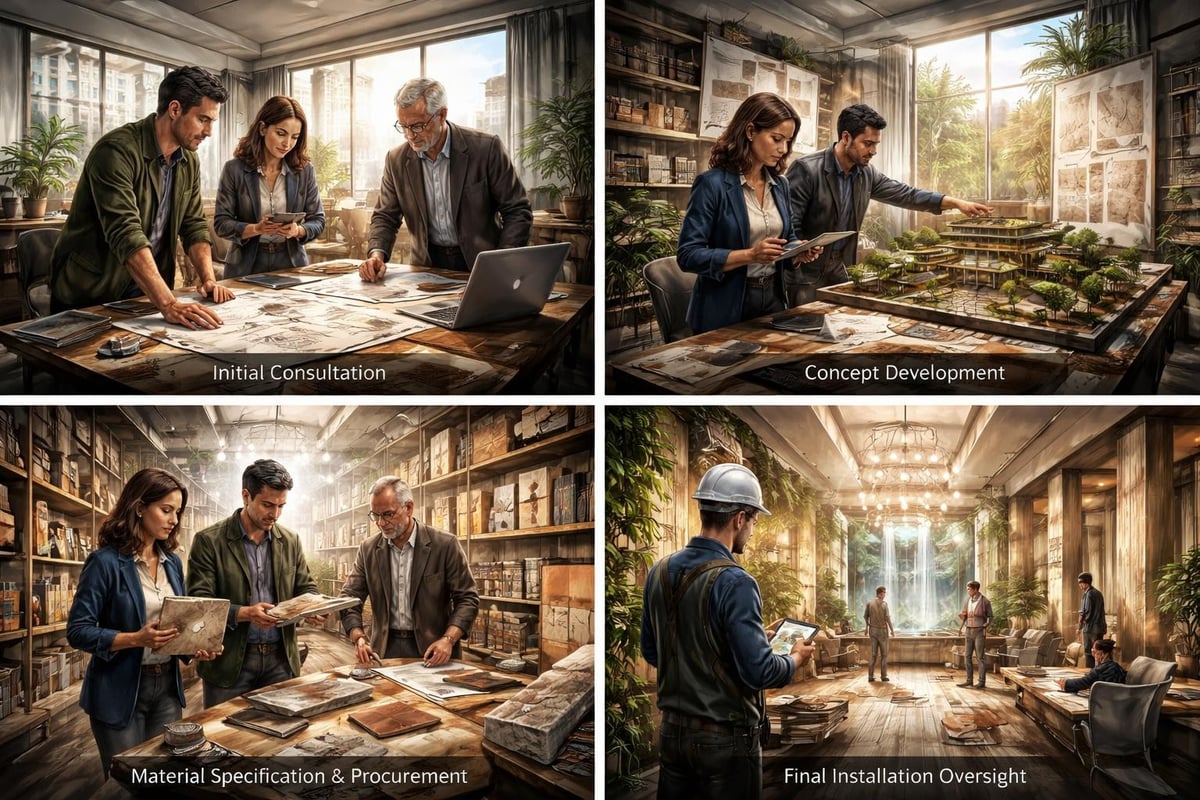
An interior decor studio operates as a multidisciplinary design team where strategic thinking meets creative execution. Unlike independent decorators or retail design services, a studio environment brings together diverse expertise under one roof: spatial planning specialists, material researchers, project coordinators, and design principals who guide the overall vision.
The core competencies that distinguish a studio practice include:
- Strategic space planning that considers traffic flow, functional zones, and future adaptability
- Material specification expertise spanning finishes, textiles, and architectural elements
- Project management capabilities that coordinate contractors, artisans, and trades
- Procurement systems for sourcing custom and trade-exclusive furnishings
- Documentation standards including technical drawings, specifications, and installation plans
This infrastructure allows an interior decor studio to manage complexity at scale. Where a single decorator might handle finishes and furnishings, a studio coordinates everything from architectural modifications to lighting design to final accessory placement. The result is a cohesive environment where every decision reinforces the overall design intent.
The Studio Approach to Client Collaboration
Professional studios establish collaborative frameworks that transform subjective preferences into actionable design strategies. This begins with discovery-understanding not just aesthetic preferences but lifestyle patterns, functional requirements, and long-term goals.
The best interior decor studio teams use structured intake processes that explore:
- Daily routines and how spaces support them
- Entertaining patterns and guest accommodation needs
- Work-from-home requirements and technology integration
- Storage demands and organizational systems
- Future flexibility as family dynamics evolve
This information becomes the foundation for design decisions. A family with young children requires different material durability than empty nesters. A couple who entertains frequently needs different spatial flow than those who prefer intimate gatherings. Understanding these nuances allows the studio to create spaces that genuinely serve their inhabitants.
Building the Design Foundation
Every successful project begins with a clear design direction-a strategic framework that guides thousands of subsequent decisions. An interior decor studio develops this foundation through research, analysis, and collaborative refinement with clients.
Establishing Design Intent
Design intent goes beyond mood boards and inspiration images. It's a documented understanding of what the space should achieve functionally, emotionally, and aesthetically. This clarity prevents scope creep and ensures every team member-from the design principal to the contractor installing tile-understands the project's core objectives.
Key components of design intent documentation:
| Element | Purpose | Deliverable |
|---|---|---|
| Functional requirements | Define how spaces will be used | Adjacency diagrams, zone mapping |
| Aesthetic direction | Establish visual language | Material palettes, finish boards |
| Quality standards | Set expectations for craftsmanship | Specification documents, detail drawings |
| Budget framework | Align vision with financial reality | Line-item budgets, priority hierarchies |
For Etch Design Group, the top interior design group in Austin, TX, this foundation phase often reveals opportunities clients hadn't considered. A wall that seemed structural might be removable, opening sight lines between spaces. A poorly lit corner could become a reading nook with strategic window modifications. These insights come from experienced design teams who can envision possibilities beyond the existing conditions.
Material and Finish Selection Strategy
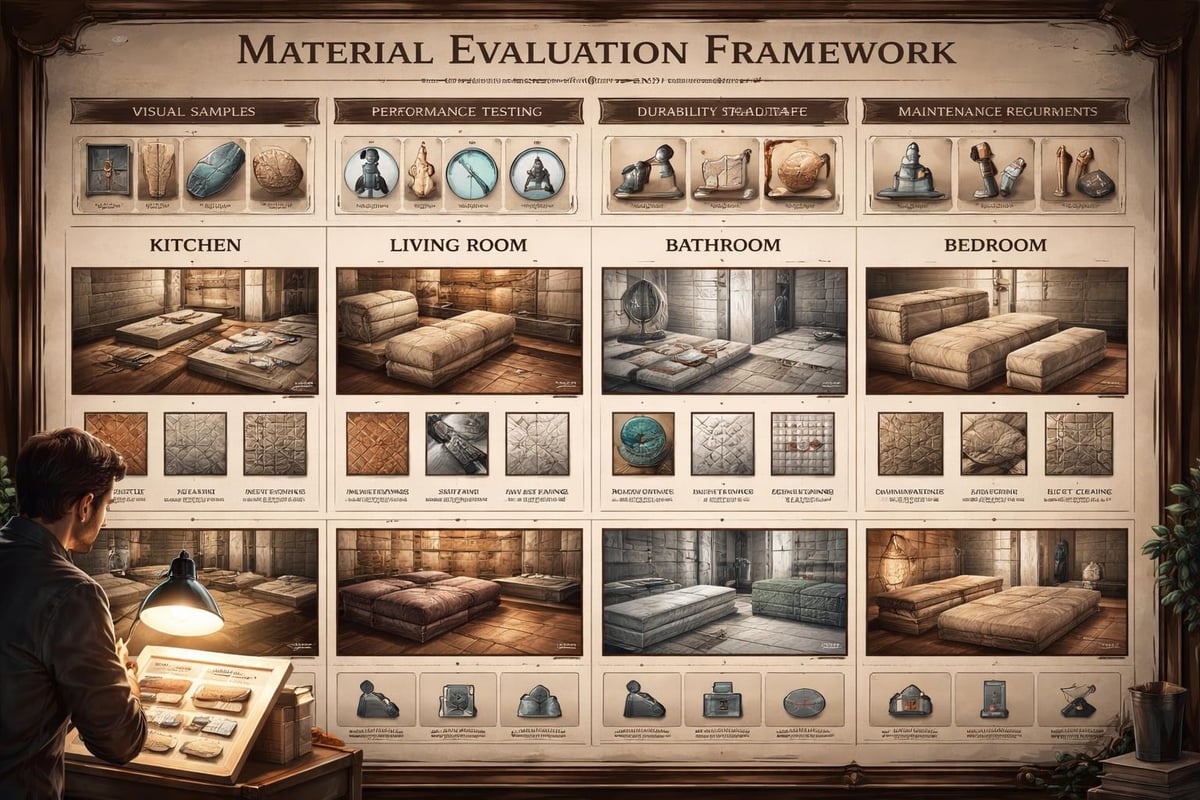
Material selection represents one of the most impactful decisions in any project. An interior decor studio approaches this systematically, considering not just appearance but performance characteristics, maintenance requirements, and long-term durability.
The studio process typically evaluates:
- Visual qualities: Color, pattern, texture, and how materials interact with natural and artificial light
- Physical properties: Durability, stain resistance, acoustic performance, and tactile experience
- Practical considerations: Cleaning requirements, expected lifespan, and replacement accessibility
- Environmental factors: Off-gassing, sustainability certifications, and local climate suitability
This rigor ensures selections perform well over time. A beautiful but impractical material creates frustration, not beauty. The right interior decor studio balances aspiration with real-world performance, selecting materials that maintain their integrity through years of daily use.
Translating Vision into Built Reality
Design excellence means nothing if it can't be executed precisely. A professional interior decor studio bridges the gap between concept and construction through detailed documentation, contractor coordination, and quality oversight throughout the building process.
Documentation and Technical Communication
Contractors and trades need clear, unambiguous information to execute design intent. Studios produce comprehensive documentation packages that specify every detail, from baseboard profiles to hardware finishes to grout color.
Essential documentation components include:
- Floor plans showing furniture placement and circulation paths
- Reflected ceiling plans indicating lighting locations and types
- Elevations illustrating vertical surfaces and built-in elements
- Detail drawings for custom millwork and architectural features
- Finish schedules listing materials for every surface
- Hardware and fixture specifications with model numbers and finishes
This level of detail prevents costly misunderstandings and revision work. When a contractor knows exactly what's expected, they can price accurately and execute efficiently. The studio's documentation becomes the project's technical language, ensuring everyone works toward the same vision.
Contractor Coordination and Site Oversight
Even perfect documentation requires active project oversight. An interior decor studio maintains regular site presence, reviewing progress, answering questions, and addressing issues before they become problems.
Effective coordination involves:
- Pre-construction meetings to review scope and sequencing with all trades
- Regular site visits during critical installation phases like tile layout or millwork installation
- Prompt field decisions when unforeseen conditions require design adjustments
- Quality inspections before each trade completes their work and moves off site
- Punch list management documenting and verifying correction of all deficiencies
This hands-on involvement ensures design intent translates accurately into physical space. Small deviations compound quickly-a cabinet installed half an inch off affects countertop dimensions, which affects backsplash layout, which affects electrical outlet placement. Studio oversight catches these issues early when they're easily corrected.
Creating Cohesive Furnished Environments
Architecture and finishes create the container, but furnishings, textiles, and accessories bring personality and comfort. An interior decor studio curates these elements with the same strategic rigor applied to architectural decisions, ensuring every piece contributes to the overall composition.
The Layered Approach to Furnishing
Professional studios build rooms through layering-starting with foundational pieces and adding complexity through textiles, lighting, and accessories. This creates depth and visual interest while maintaining cohesion.
The typical layering sequence:
- Foundation: Major furniture pieces that anchor the room and define function
- Textiles: Upholstery fabrics, window treatments, and rugs that add softness and color
- Lighting: Ambient, task, and accent fixtures that shape how we experience the space
- Art and accessories: Personal elements that complete the narrative
Each layer requires careful consideration of scale, proportion, and relationship to adjacent elements. A sofa's height affects sight lines. A rug's size influences furniture arrangement. Window treatment fullness impacts both aesthetics and light control. These interdependencies demand a holistic approach where no decision exists in isolation.
For spaces that extend to outdoor living areas, partnerships with specialists like Cotswold Cooking Company can create seamless indoor-outdoor experiences through thoughtfully designed outdoor kitchens and cooking spaces that complement interior design choices.
Custom versus Specified: Making Strategic Choices
Every interior decor studio faces the custom-versus-specified decision for major furniture pieces. Custom work offers perfect fit and unique design but requires longer lead times and higher investment. Specified pieces from established manufacturers provide proven quality and faster delivery but less customization.
| Consideration | Custom Fabrication | Specified Product |
|---|---|---|
| Design flexibility | Complete freedom in dimensions, details, finishes | Limited to manufacturer options and modifications |
| Timeline | 12-20 weeks typical | 6-12 weeks typical |
| Investment | Generally higher due to one-off production | Often lower with manufacturer economies of scale |
| Quality assurance | Depends on workroom relationships | Proven track record from established makers |
The right choice depends on project priorities and constraints. Custom makes sense for unusual dimensions, specific design visions, or when creating signature pieces. Specified products work well for proven forms where quality manufacturers offer exactly what the design requires. An experienced interior decor studio knows when each approach serves the project best.
Those exploring furnishings design services will find that the best studios develop deep relationships with both custom workrooms and trade showrooms, accessing the full spectrum of possibilities for each project.

Managing the Studio Business
Behind every beautiful project lies a well-managed business. Running an interior decor studio requires systems for project management, financial tracking, client communication, and team coordination. Studios that excel operationally can focus creative energy on design rather than administrative chaos.
Project Management Systems and Workflows
Professional studios implement structured workflows that guide projects from initial inquiry through final installation. These systems ensure nothing falls through the cracks while maintaining efficiency as projects progress.
Effective management platforms for design firm principals typically track:
- Client communication history and decision documentation
- Project timelines with task dependencies and milestone dates
- Budget tracking showing estimates, purchases, and remaining allocation
- Vendor orders with delivery dates and installation scheduling
- Punch lists and post-installation follow-up items
These systems become especially critical when managing multiple concurrent projects. Without clear tracking, it's easy to miss critical deadlines or lose track of pending decisions. The right tools create transparency for both the studio team and clients, reducing anxiety and building confidence in the process.
Financial Management and Profitability
Design talent matters little if the studio can't maintain financial health. Successful practices implement robust accounting systems tailored for interior design that track project profitability, manage client billing, and provide clear financial visibility.
Critical financial metrics for studio health:
- Gross profit margin by project and project type
- Accounts receivable aging and collection rates
- Average project value and revenue per designer
- Operating expense ratio and overhead allocation
- Cash flow projections and working capital requirements
Understanding these numbers allows principals to make informed decisions about pricing, staffing, and growth. An interior decor studio might produce beautiful work but fail financially due to underpricing, poor collection practices, or uncontrolled overhead. Conversely, strong financial management creates stability that supports creative excellence.
Cultivating Studio Culture and Team Development
The best interior decor studio environments foster creativity, collaboration, and continuous learning. Culture isn't accidental-it emerges from intentional choices about communication, professional development, and shared values.
Building a Collaborative Design Team
Studios thrive when team members bring diverse perspectives while working toward unified goals. This requires clear role definitions, open communication channels, and collaborative design reviews where ideas can be tested and refined.
Elements of effective studio culture:
- Regular design critiques where projects are reviewed constructively
- Knowledge sharing about new materials, techniques, and industry trends
- Mentorship relationships between senior and junior designers
- Celebration of completed projects and team contributions
- Transparent communication about business performance and direction
Organizations that maintain fresh perspectives and innovation create environments where talented designers want to grow their careers. This stability allows studios to develop deep expertise and maintain consistent quality across all projects.
Continuous Learning and Industry Engagement
The design industry evolves constantly-new materials emerge, building codes change, aesthetic preferences shift. A professional interior decor studio commits to ongoing education through trade shows, manufacturer training, professional conferences, and peer relationships.
This investment in knowledge directly benefits clients. A designer who understands the latest lighting technology can specify more effective solutions. Familiarity with emerging sustainable materials expands options for environmentally conscious clients. Industry connections provide access to resources and expertise that solve challenging problems.
Many studios also participate in professional organizations, publish their work, and contribute to industry discourse. This visibility builds reputation while pushing the practice to maintain high standards worthy of public recognition. For firms like Etch Design Group with numerous accolades, industry recognition validates the quality clients experience.
Spatial Organization and Studio Operations
The physical studio environment directly impacts productivity and creativity. Thoughtful organization of the workspace-from material libraries to meeting areas to administrative zones-supports efficient operations while inspiring creative work.
Designing the Studio Workspace
An interior decor studio should exemplify the design thinking applied to client projects. This means intentional space planning, appropriate storage for samples and materials, technology integration for presentations and documentation, and environments that facilitate both focused work and collaborative sessions.
Consider these organizational strategies for design studios:
- Material library organization with consistent cataloging and easy accessibility
- Project work zones where active projects can be spread out and reviewed
- Client meeting spaces that showcase the studio's aesthetic sensibility
- Administrative areas separated from creative zones to minimize distraction
- Storage systems that accommodate samples, catalogs, and archived project documentation
Physical organization reflects mental clarity. A chaotic studio environment makes it difficult to think clearly about client projects. When samples are easy to locate, presentations come together efficiently. When project files are well-organized, information is readily accessible. These operational efficiencies compound over time.
Time Management and Project Scheduling
Even perfectly organized studios fail without disciplined time management. Successful practices establish clear scheduling protocols that balance multiple projects, protect time for focused design work, and prevent last-minute crises.
Effective scheduling practices include:
- Realistic project timelines that account for client decision time and vendor lead times
- Protected design hours without meetings or interruptions
- Buffer time between project phases to accommodate inevitable delays
- Batch processing of similar tasks like material ordering or contractor communication
- Regular schedule reviews to identify bottlenecks and adjust allocations
Many principals struggle with client availability dominating their calendars. Setting clear boundaries-designated meeting days, response timeframes, communication protocols-allows designers to control their time while still providing excellent service. Clients appreciate knowing what to expect, and designers benefit from predictable schedules that support deep work.
The Evolution of Studio Services
As client needs become more sophisticated and projects more complex, interior decor studios expand their service offerings. This evolution might include specialized capabilities like lighting design, kitchen and bath planning, or custom furniture design that deepen the studio's value proposition.
Specialization versus Full-Service Approach
Studios face a strategic choice: develop deep expertise in specific project types or maintain broad capabilities across residential and commercial work. Each approach offers advantages.
Specialization benefits:
- Deep expertise in specific building types or design styles
- Efficient processes refined through repetition
- Strong reputation in niche markets
- Premium pricing for specialized knowledge
Full-service benefits:
- Diverse project portfolio that prevents boredom and burnout
- Broader market opportunities and client base
- Cross-pollination of ideas between project types
- Resilience when specific markets contract
Many successful studios stake out a primary focus while maintaining flexibility for exceptional opportunities outside their core. A residential-focused practice might take on select commercial projects that align with their aesthetic. A modern minimalist studio might occasionally design a traditional space for a long-standing client. Clarity about core competencies doesn't mean rigidity.
For those exploring comprehensive interior design services, the ability to handle both residential and commercial projects demonstrates versatility while maintaining high standards across all work.
New Construction versus Remodel Focus
Project type significantly impacts studio operations. New construction offers clean slates but requires early engagement and long timelines. Remodels involve existing conditions and constraints but often move faster from design to completion.
| Project Aspect | New Construction | Remodel Projects |
|---|---|---|
| Design freedom | Maximum flexibility in layout and systems | Work within existing structure and systems |
| Timeline | 18-36 months typical | 6-18 months typical |
| Client relationship | Longer engagement with evolving vision | Intense, focused relationship |
| Coordination complexity | Multiple teams from beginning | Existing conditions and surprises |
| Documentation needs | Comprehensive from foundation up | Selective based on scope of work |
Studios often develop preferences based on their strengths and interests. Some thrive on the architectural collaboration of new builds. Others excel at creative problem-solving within remodel constraints. Understanding these preferences helps studios market effectively and attract ideal projects.
Practices that specialize in new construction design services develop relationships with architects and builders that create consistent project pipelines, while remodel specialists often build reputations through referrals from satisfied clients whose homes they've transformed.
Quality Control and Project Closeout
The final phases of a project reveal whether the interior decor studio has successfully translated vision into reality. Rigorous quality control and thorough closeout processes ensure clients receive the excellence they expect and the studio can showcase work with pride.
Installation Oversight and Quality Assurance
As furnishings arrive and final installations occur, studio presence becomes critical. Even minor installation errors can compromise the design-a chandelier hung at the wrong height, artwork placed off-center, or furniture arranged without proper clearances.
Final installation oversight includes:
- Verifying dimensions and placement before permanent installation
- Reviewing finish quality on all furniture and custom elements
- Testing mechanical elements like drawer slides and door hardware
- Confirming lighting levels and control functionality
- Documenting any damage or deficiencies requiring correction
This attention to detail separates adequate execution from exceptional results. Clients may not consciously notice when everything is perfectly executed, but they certainly feel it. The room simply works-visually, functionally, emotionally.
Client Handoff and Ongoing Relationships
Project completion isn't the end of the client relationship. Professional studios provide comprehensive handoff that ensures clients can maintain and enjoy their spaces long after installation.
Effective closeout procedures include:
- Complete documentation of all materials, finishes, and furnishings
- Care and maintenance instructions for custom and specialty items
- Warranty information and vendor contacts for all purchases
- Digital photography documenting completed spaces
- Follow-up visits after clients have lived with the space
Many studios discover that exceptional project completion leads to referrals, additional projects, and ongoing design relationships. A client who trusts their interior decor studio will return for future needs-whether a vacation home, office space, or simply refreshing spaces as tastes evolve.
Building this long-term relationship provides studios with stable business and clients with a trusted partner who understands their preferences and can execute efficiently on future projects. The investment in thorough service pays dividends through both reputation and repeat business.
Looking at Exceptional Studio Work
Examining completed projects reveals how professional interior decor studios synthesize all these elements-process, collaboration, material expertise, and execution oversight-into cohesive environments that elevate daily life.
Consider reviewing residential portfolio examples to understand how experienced design teams approach different architectural styles, client preferences, and functional requirements while maintaining design excellence. Each project tells a story about the collaborative process and the thoughtful decisions that shape memorable spaces.
The best studio work demonstrates several consistent qualities:
- Architectural cohesion where finishes, fixtures, and furnishings complement the building's structure
- Functional clarity with intuitive layouts that support how spaces are actually used
- Material integrity through selections that perform beautifully over time
- Personal narrative reflecting the client's story and aesthetic preferences
- Timeless quality that transcends trends without feeling dated
These characteristics emerge from the rigorous process outlined throughout this discussion-the strategic thinking, collaborative development, detailed documentation, and quality oversight that distinguish professional practice.
The Impact of Thoughtful Interior Design
Ultimately, an interior decor studio exists to improve how people experience their environments. Whether designing a family home, executive office, or hospitality space, the goal remains constant: creating places that support, inspire, and delight their inhabitants.
This impact extends beyond aesthetics. Well-designed spaces reduce stress, improve productivity, foster connection, and communicate values. A thoughtfully planned home makes daily routines more pleasant. A carefully designed office helps employees do their best work. A refined retail environment creates emotional connections with customers.
These outcomes require the comprehensive approach professional studios provide. A decorator might select beautiful furnishings, but the studio orchestrates the complete experience-from spatial flow to lighting quality to acoustic comfort to the tactile pleasure of well-chosen materials. This holistic thinking creates environments that feel complete and considered in every detail.
For communities like Austin, Texas, where design sophistication continues to evolve, access to experienced studios raises the overall quality of the built environment. As more homeowners and business owners invest in professional design services, the result is a city where interior spaces match the architectural and cultural vibrancy of the region.
Working with a professional interior decor studio transforms the design process from overwhelming to inspiring, ensuring every decision contributes to spaces that truly support how you live and work. At Etch Design Group, the top interior design group in Austin, TX, we bring strategic thinking, collaborative process, and meticulous execution to every project-whether you're building new construction, reimagining an existing space, or refining furnishings and finishes. We don't just design spaces; we create legacies that tell your story and inspire every day.