
SHARE
Finding the right interior decorator Austin TX can transform your project from a simple renovation into a legacy space that tells your story for generations. We've worked with hundreds of homeowners across Westlake, Tarrytown, and beyond who initially searched for "interior decorator Austin TX" only to discover they needed a comprehensive design partner, not just someone to select paint colors. The distinction matters profoundly when you're investing $500K or more into a home that should reflect your values, support your lifestyle, and stand the test of time.
Key Takeaways
- Professional interior decorators in Austin now function as full-service designers, managing everything from architectural details to final styling
- The Austin market demands designers who understand local architectural styles like Spanish Hacienda and Mid-Century Modern
- Budget transparency and clear processes separate experienced firms from decorators who work project-to-project
- New construction, remodels, and furnishings require different expertise levels and timelines
- Early engagement with your design team (ideally 12-18 months before construction) prevents costly mistakes
Ready to discuss your vision with a team that's shaped Austin's luxury residential landscape for years? Our complimentary discovery call helps you understand exactly what's possible for your space, timeline, and investment level.
What Distinguishes an Interior Decorator Austin TX from a Full-Service Designer
The terminology confuses many homeowners. When you search "interior decorator Austin TX," you're likely seeking someone who can handle far more than traditional decorating encompasses.
Traditional decorators typically focus on:
- Paint color selection
- Furniture placement
- Accessory styling
- Window treatments
- Artwork curation
Full-service interior designers manage:
- Architectural planning and space layout
- Material and finish specifications
- Custom cabinetry design
- Lighting design and electrical planning
- Contractor coordination
- Budget development and management
- Furnishings and styling
We've found that Austin homeowners planning significant investments need the comprehensive approach. When you're building a 4,500-square-foot home in Rob Roy or completely reimagining a 1960s ranch in Rollingwood, surface-level decorating won't address the foundational decisions that determine whether your space truly functions for your family.
The shift in our industry reflects what modern design language actually means today. Terms like "curated," "elevated," and "intentional" aren't marketing fluff. They describe a methodology where every decision, from framing details to finish hardware, receives equal strategic consideration.
The Austin-Specific Context Every Interior Decorator Austin TX Must Understand
Austin's residential design landscape differs dramatically from Houston, Dallas, or other Texas markets. We work within a context shaped by specific architectural traditions, climate considerations, and lifestyle expectations.
Dominant Architectural Styles Requiring Specialized Knowledge
| Style | Key Interior Considerations | Common Challenges |
|---|---|---|
| Spanish Hacienda | Authentic tile work, heavy timber details, courtyard integration | Balancing historical integrity with modern systems |
| Mid-Century Modern | Clean lines, indoor-outdoor flow, strategic window placement | Updating while preserving architectural character |
| Texas Hill Country | Stone and wood materials, vaulted spaces, rustic elegance | Achieving refinement without losing warmth |
| Modern Farmhouse | Shiplap integration, industrial touches, open concepts | Avoiding trendy elements that date quickly |
Understanding Austin home styles and their interior design implications separates designers who've built their practice here from those applying generic approaches to unique contexts.
Climate plays an often-overlooked role. Austin's intense summer sun, occasional freezes, and humidity swings affect everything from window treatment specifications to finish durability. We've learned through years of experience which materials perform reliably and which create maintenance headaches for our clients.
The Westlake-Tarrytown-Downtown Corridor
These neighborhoods represent Austin's most active luxury residential markets, each with distinct expectations. Westlake clients often pursue grand-scale new construction with resort-level amenities. Tarrytown homeowners typically remodel existing homes, preserving neighborhood character while completely modernizing interiors. Downtown buyers want sophisticated urban spaces with smart storage solutions and view optimization.
An experienced interior decorator Austin TX recognizes these nuances immediately and adjusts their approach accordingly.
Budgeting for Professional Interior Design in Austin's 2026 Market
Transparency around investment levels helps homeowners make informed decisions from the start. We've seen too many projects stall because expectations didn't align with market realities.
Typical investment ranges for full-service design:
- New Construction (3,000-5,000 sq ft): $450,000-$850,000+ for complete interiors including furnishings
- Whole-Home Remodel: $350,000-$650,000+ depending on scope and finish levels
- Kitchen and Primary Suite Remodel: $150,000-$300,000 for high-end finishes and appliances
- Furnishings Only (completed construction): $100,000-$250,000 for comprehensive styling
These figures reflect Austin's current labor costs, material availability, and the quality level our clients expect. The numbers surprise some people initially, but they represent the true cost of creating spaces that function flawlessly and remain visually relevant for decades.
Designer fees structure varies across the market. Some interior decorator Austin TX professionals charge hourly rates ($150-$350/hour), while others work on flat fees or percentage-of-construction models. We've found that project-based pricing provides the clearest expectations and best aligns our interests with client goals.
Material costs have stabilized somewhat since 2024's volatility, but lead times remain extended for custom elements. Quality stone slabs, custom cabinetry, and imported tile still require 12-16 weeks minimum. Upholstered furniture from better manufacturers runs 16-24 weeks. These realities shape realistic interior design timelines for new construction and remodels.
The Complete Process: What Working with a Professional Interior Decorator Austin TX Actually Entails
Understanding the design process helps homeowners prepare mentally and logistically for the journey ahead.
Phase One: Discovery and Programming (Weeks 1-4)
We begin every project by understanding not just what clients want their space to look like, but how they actually live. This programming phase involves detailed conversations about daily routines, entertaining patterns, storage needs, technology integration, and long-term plans.
Questions we explore include:
- How do you start your mornings?
- Where do mail, keys, and daily items accumulate?
- How many people cook simultaneously in your kitchen?
- Do you work from home regularly?
- What spaces feel most important to your family's connection?
These seemingly simple questions reveal design requirements that purely aesthetic approaches miss entirely.
Phase Two: Conceptual Design (Weeks 5-10)
With programming complete, we develop the conceptual vision. This includes space planning, architectural details, finish palettes, and the overall design language that will guide every subsequent decision.
For new construction, this phase happens alongside architect collaboration. We've found that early engagement, ideally when floor plans are still flexible, prevents the common scenario where beautiful architectural drawings fail to accommodate the furniture and flow clients actually need.
Residential remodel design follows a similar but condensed timeline, working within existing structural parameters while maximizing spatial improvements.
During this phase, we're not just creating pretty renderings. We're solving problems: how natural light moves through spaces at different times of day, where outlets need placement for future furniture arrangements, which sight lines matter most, and how to sequence spaces for optimal daily flow.
Phase Three: Design Development and Documentation (Weeks 11-20)
The design development phase transforms concepts into specifications contractors can price and build. We produce detailed drawings, material boards, lighting plans, and fixture schedules.
This documentation phase separates professional interior decorator Austin TX firms from decorators who work more casually. Without precise specifications, contractors provide widely varying bids, and the construction phase becomes reactive rather than intentional.
We're specifying everything from:
- Exact paint formulas and finish sheens for every surface
- Tile layouts with grout color and width
- Lighting fixture models with lamping specifications
- Plumbing fixture finish families (ensuring kitchen, baths, and utility spaces coordinate)
- Hardware styles and finishes throughout
- Custom millwork details and dimensions
Phase Four: Construction Administration (Duration Varies)
Once construction begins, our role shifts to stewardship. We attend job-site meetings, answer contractor questions, review installations, and make field decisions when conditions require adjustments.
This phase tests a designer's experience level. Unexpected conditions arise constantly in construction. The subfloor isn't level. The ductwork conflicts with the ceiling detail. The stone slab has a vein running through the planned backsplash layout. An experienced team navigates these challenges while maintaining the design vision and budget parameters.
We've learned that accessible, decisive communication during construction prevents small issues from becoming expensive problems.
Furnishings and Styling: The Final Layer That Completes the Vision
Even the most architecturally refined space feels incomplete without thoughtful furnishings. This final phase brings warmth, personality, and the collected quality that distinguishes truly special homes from merely well-constructed ones.
Our furnishings work addresses several layers simultaneously:
Functional furniture: Sofas, dining tables, beds, and case goods selected for both aesthetics and how families actually use spaces
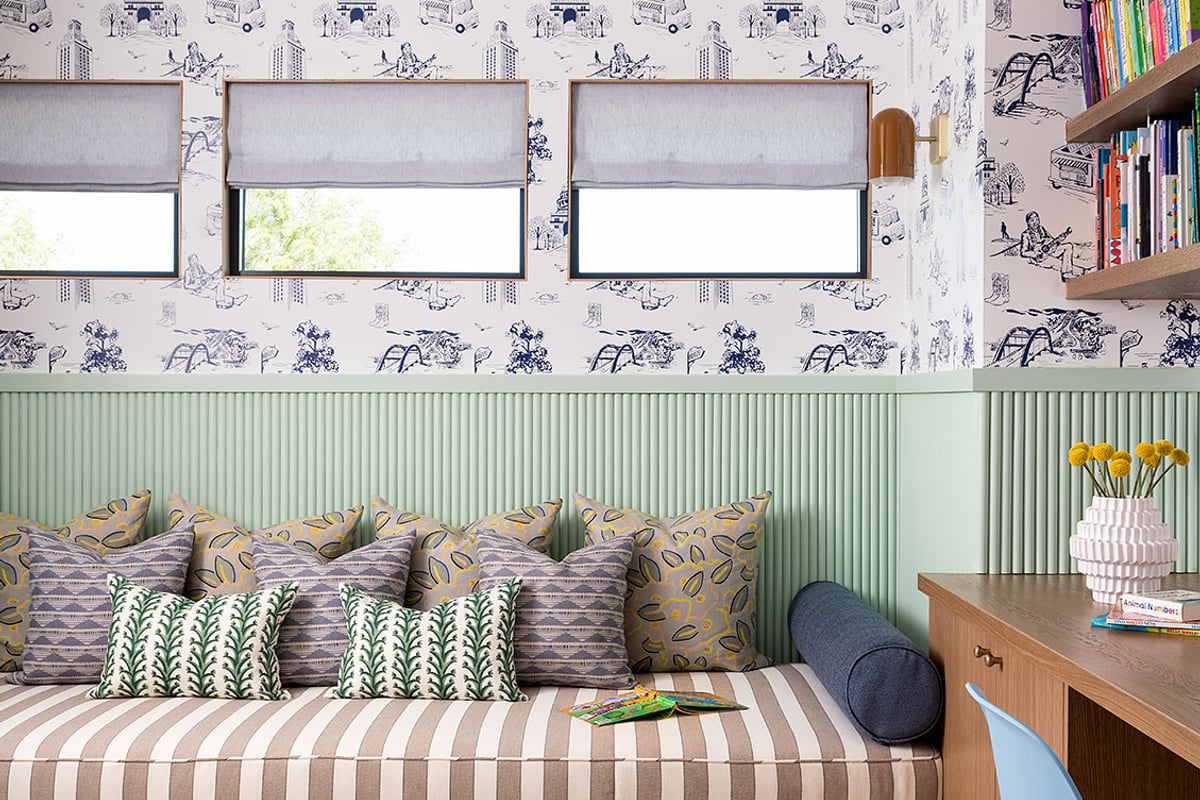
Layered textiles: Area rugs, window treatments, throw pillows, and bedding that add softness and acoustic comfort while introducing pattern and texture
Lighting: Table lamps, floor lamps, and decorative fixtures that provide task lighting and ambient warmth
Art and accessories: Curated pieces that reflect client interests and add the personal touches that make a house feel like home
The timing of furnishings varies by project type. For new construction, we typically begin furniture selection during the construction administration phase, placing orders so installations can happen shortly after move-in. Remodel projects often involve phased furniture replacement as budgets allow.
What many people discover is that furnishings represent a significant portion of total project investment, often 30-40% of the overall budget. Quality upholstered pieces, properly scaled dining tables, and custom window treatments aren't inexpensive, but they're the elements clients interact with daily for years.
Trends Worth Considering and Trends to Avoid in 2026
The design world moves in cycles, and knowing which trends have staying power versus which will date your home matters enormously when making permanent architectural decisions.
What's gaining momentum in Austin luxury homes:
- Warmer neutral palettes replacing the gray dominance of previous years
- Natural materials with visible texture and variation
- Burl wood furniture bringing organic sophistication
- Integrated technology that remains invisible until needed
- Dedicated spaces for wellness (meditation rooms, fitness areas, spa-quality bathrooms)
What we're moving away from:
- All-white interiors that photograph well but feel sterile daily
- Overly industrial aesthetics with exposed everything
- Vintage pieces that read dated rather than timeless
- Maximalist approaches that feel cluttered in Austin's bright light
- Certain trends that don’t work in small spaces
The key is understanding the difference between design trends and personal style. Trends come and go. Your authentic preferences, when expressed through quality materials and thoughtful proportions, remain relevant indefinitely.
We're seeing clients gravitate toward what Elle Decor identifies as fall 2025’s shift toward warmer, more layered, personally meaningful interiors. This aligns perfectly with how we've always approached design: creating spaces that reflect individual stories rather than chasing whatever currently dominates social media.
Questions to Ask When Interviewing an Interior Decorator Austin TX
Selecting your design partner ranks among your project's most consequential decisions. These questions help evaluate whether a firm's approach aligns with your needs:
About Experience and Expertise
- How many projects of this type and scale have you completed in the past 24 months?
- What percentage of your work involves new construction versus remodels versus furnishings only?
- Do you have relationships with Austin-area contractors you've worked with repeatedly?
- Can you share examples of projects with similar architectural styles or scope?
About Process and Communication
- What does your typical timeline look like from contract signing to project completion?
- How frequently will we communicate during different project phases?
- Who specifically will I work with day-to-day?
- How do you handle disagreements or situations where I don't love a proposed direction?
About Budget and Investment
- How do you structure your fees?
- What's included in your design fee versus what incurs additional costs?
- How do you help clients make decisions when we're tracking over budget?
- Do you receive commissions from vendors, and how does that affect product selection?
About Philosophy and Approach
- How would you describe your design philosophy?
- What role do clients play in the design process?
- How do you balance current trends with timeless design?
- What happens if our contractor has questions during construction?
The answers reveal not just competence but compatibility. You're entering a relationship that will span months or years. The designer's communication style, decision-making approach, and values should align with yours.
The Collaborative Team: Why Your Interior Decorator Austin TX Needs Strong Industry Relationships
Exceptional residential design never happens in isolation. We succeed because we've built relationships with the best architects, contractors, artisans, and vendors in Austin.
The core collaborative team typically includes:
Architects who translate lifestyle needs into structural reality while ensuring code compliance and site-specific considerations
General contractors who manage subcontractors, schedules, and the physical building process
Interior designers who guide finish selections, space planning, lighting, and furnishings to create cohesive environments
Specialized trades including tile setters, cabinet makers, stone fabricators, electricians, and painters whose craftsmanship determines final quality
When these relationships have been built over years and dozens of projects, the team operates with shared standards and mutual respect. Communication flows efficiently. Problems get solved proactively. Quality remains consistent.
We've also cultivated relationships with Austin's best furniture showrooms, fabric houses, lighting specialists, and artisans. These connections mean we can source exactly the right pieces for each project, often accessing trade-only resources unavailable to the public.
For our commercial interior design work, the collaborative team expands to include brand strategists, operational consultants, and specialized contractors familiar with commercial code requirements.
When to Engage Your Interior Decorator Austin TX for Maximum Value
Timing your designer engagement dramatically affects both project outcomes and budget efficiency. We've watched homeowners make expensive mistakes by bringing design professionals in too late.
For New Construction
Ideal engagement point: During preliminary architectural planning, before floor plans finalize
Why it matters: We can influence room dimensions, window placement, ceiling heights, and structural elements that determine how successfully the home functions and feels. Moving a wall during design costs nothing. Moving it during construction costs thousands.
Minimum engagement point: Before construction documents go to permit. At this stage we can still affect finish selections, lighting plans, and many architectural details.
Too late: After framing begins. At this point, structural decisions are fixed, and we're limited to surface-level choices.
For Remodels
Ideal engagement point: When you first start thinking seriously about renovating, before contractor interviews
Why it matters: We help define scope accurately, create realistic budgets, and develop designs contractors can price consistently. This prevents the common scenario where three contractors provide wildly different bids for vaguely defined work.
Minimum engagement point: After contractor selection but before demolition
Too late: During construction, when you're making finish selections under pressure without an overall vision
Understanding interior design timelines for remodels helps you plan engagement appropriately.
For Furnishings Projects
Ideal engagement point: 4-6 months before you want to move in or have the space photography-ready
Why it matters: Quality furniture carries 16-24 week lead times. Custom window treatments require 10-14 weeks. Art sourcing takes time to do thoughtfully.
Minimum engagement point: 8-10 weeks before completion, accepting you'll likely need to prioritize essential pieces first and layer in others over time
Red Flags When Evaluating Interior Decorator Austin TX Options
Certain warning signs indicate you should continue your search:
- Lack of portfolio diversity: If every project looks nearly identical, the designer likely imposes their style rather than developing yours
- Vague pricing: Professionals should clearly explain their fee structure and typical project costs
- Poor communication during sales process: If they're hard to reach or slow to respond now, it worsens under project pressure
- No formal contract: Legitimate firms use detailed agreements protecting both parties
- Pressure to decide immediately: Quality designers stay busy but don't use high-pressure tactics
- Dismissive of your ideas: Collaboration requires mutual respect, not designers who believe only their vision matters
- No verifiable references: Established firms readily provide past client contacts
- Unrealistic timelines: Promises of completed projects in impossibly short timeframes signal inexperience or dishonesty
Trust your instincts. If something feels off during initial conversations, it rarely improves once contracts are signed and deposits paid.
The ROI of Professional Interior Design
Clients occasionally question whether professional design services justify the investment. We understand the question, especially when you're already allocating significant funds toward construction and furnishings.
The return manifests in several ways:
Avoided mistakes: A single error (wrong tile order, poorly planned lighting, furniture that doesn't fit) easily costs more than design fees would have prevented it
Increased home value: Professionally designed homes command premiums when sold, though we design for how you'll live, not hypothetical future buyers
Time savings: Managing construction details and product sourcing consumes hundreds of hours. Our clients maintain their careers and sanity while we handle the complexity
Enhanced daily life: You'll inhabit this space daily for years. The difference between a merely functional home and one that truly supports your lifestyle compounds over time
Stress reduction: Construction and design involve thousands of decisions. Having an experienced guide prevents decision fatigue and analysis paralysis
We've also found that clients who invest in professional design typically spend budgets more effectively. Rather than over-investing in visible elements while neglecting infrastructure (lighting, storage, flow), every dollar goes toward creating holistic value.
Why Austin's Best Interior Decorator Austin TX Firms Focus on Legacy, Not Just Style
The design industry contains plenty of talented decorators who create beautiful rooms. What separates the best interior decorator Austin TX firms is a focus on legacy rather than just aesthetics.
We ask different questions from the start:
- How will this home support your family in 5, 10, 15 years?
- What memories do you want to create in these spaces?
- How can we design for adaptability as your needs evolve?
- What story should this environment tell about who you are and what you value?
This perspective shapes everything. We design primary suites anticipating aging-in-place needs. We create kids' spaces that adapt from nursery to teen years. We plan for multigenerational living, home offices, and lifestyle shifts we can anticipate even if clients haven't considered them yet.
The homes we designed 15 years ago still function beautifully because we built in flexibility and chose materials that age gracefully rather than chasing trends.
You can learn more about how we approach interior design services with this long-term perspective on our website, where we detail our commitment to creating spaces that become treasured family legacies.
Finding the right interior decorator Austin TX partnership means identifying professionals who combine technical expertise, collaborative spirit, and a genuine commitment to understanding your unique vision. The investment in professional design services returns value through avoided mistakes, enhanced functionality, and spaces that truly support how you want to live. Whether you're planning new construction, reimagining an existing home, or completing a space with thoughtful furnishings, the right design partner transforms what could be simply a house into a legacy that tells your story for generations. Etch Design Group specializes in guiding discerning homeowners through this journey with the experience, relationships, and strategic thinking your investment deserves.