
SHARE
The appeal of minimalist interior design has evolved far beyond the austere, all-white rooms that once defined the aesthetic. Today's minimalist interior designers craft spaces that balance restraint with warmth, creating environments that feel both intentional and inviting. This design philosophy centers on the belief that less truly can be more, when every element serves a purpose and contributes to the overall harmony of a space. For homeowners and business owners alike, understanding the nuanced approach of skilled minimalist interior designers can unlock the potential to create environments that support well-being, productivity, and lasting beauty.
The Core Philosophy Behind Minimalist Design
Minimalist interior designers operate from a foundation of intentionality. Every furniture piece, material selection, and spatial decision reflects careful consideration rather than impulsive decoration. This approach doesn't mean creating cold or sterile environments. Instead, it focuses on eliminating the unnecessary to highlight what truly matters.
The philosophy embraces several guiding principles:
- Functional beauty: Each element must serve a practical purpose while contributing aesthetically
- Quality over quantity: Fewer, better-crafted pieces replace multiple lower-quality items
- Spatial breathing room: Negative space receives as much attention as occupied areas
- Honest materials: Natural textures and finishes are celebrated rather than concealed
These principles align closely with the Japandi design approach, which merges Japanese minimalism with Scandinavian warmth. The result is a lived-in minimalism that feels approachable rather than precious.
Why Clients Seek Minimalist Interior Designers
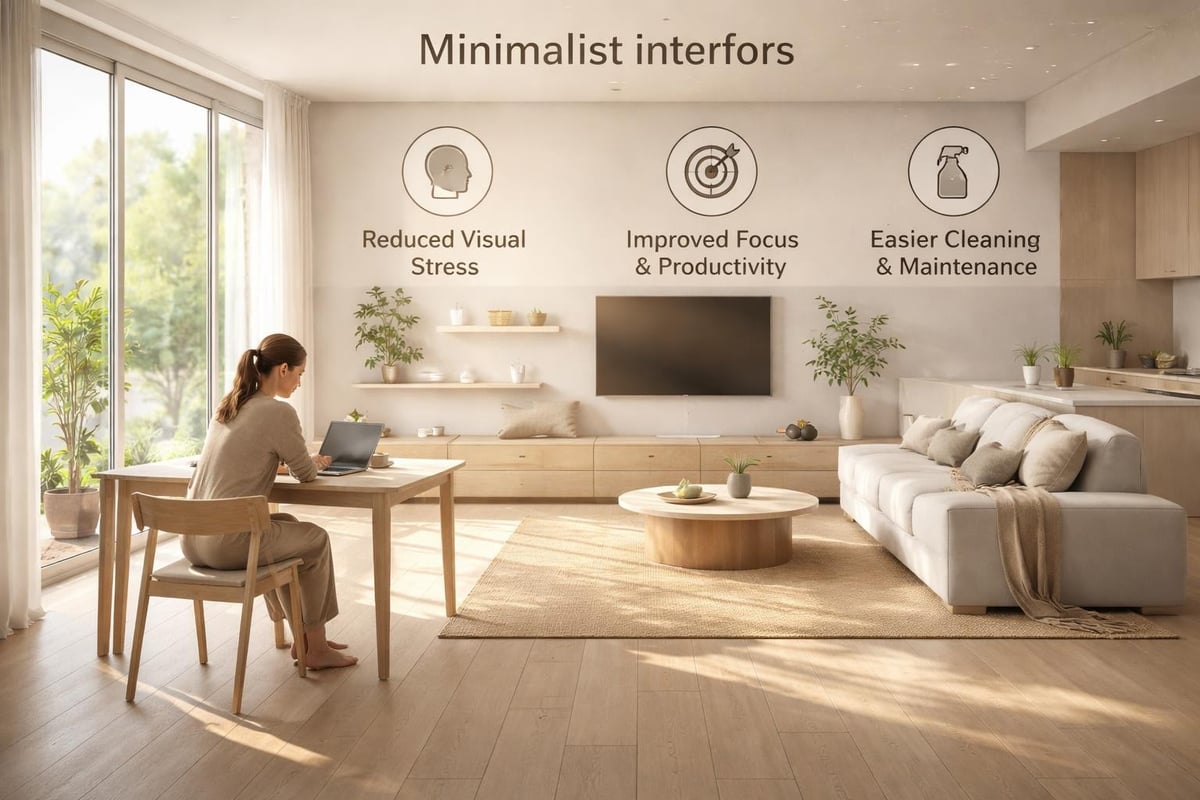
Homeowners gravitate toward minimalist interior designers for reasons that extend beyond aesthetic preference. In our increasingly complex world, the appeal of simplified, thoughtfully curated spaces continues to grow. These environments offer visual calm that counters the constant stimulation of modern life.
Practical benefits include easier maintenance, improved functionality, and spaces that adapt more gracefully to changing needs. When you own fewer items of higher quality, your environment naturally requires less upkeep and organization.
Distinguishing Minimalism from Starkness
A common misconception portrays minimalist interior designers as advocates for barren, uncomfortable spaces. This misunderstanding has created resistance among those who fear their homes will feel cold or unwelcoming. Professional minimalist interior designers know the difference between thoughtful restraint and excessive removal.
The key distinction lies in layering and warmth. While a stark room eliminates all decoration and comfort, a well-designed minimalist space incorporates:
- Textural variety through natural materials like linen, wool, and wood
- Strategic pops of color that don't overwhelm the palette
- Comfortable, well-proportioned furniture that invites use
- Personal touches that reflect the occupants' story
| Stark Design | Thoughtful Minimalism |
|---|---|
| All-white surfaces | Warm neutrals with accent tones |
| Hard, uncomfortable seating | Simplified forms with plush comfort |
| Zero decoration | Carefully curated meaningful objects |
| Cold, clinical atmosphere | Inviting, serene ambiance |
| Echoing, empty rooms | Balanced negative space |
Current design trends for 2025 show minimalism evolving to incorporate cozier elements and natural materials, reflecting this more nuanced understanding.
The Role of Texture in Minimalist Spaces
Minimalist interior designers masterfully employ texture to prevent monotony. When color palettes remain restrained, textural contrast becomes essential for creating visual interest and depth. A room might feature smooth plaster walls alongside rough-hewn timber beams, soft linen drapery paired with sleek stone countertops, and woven jute rugs beneath smooth leather seating.
This textural layering achieves sophistication without relying on pattern or color variation. It creates a tactile richness that engages multiple senses while maintaining visual calm.
The Process: How Minimalist Interior Designers Work
Working with minimalist interior designers involves a distinctive process that differs from traditional interior design approaches. The journey typically begins with subtraction rather than addition, asking what can be removed or simplified before considering what should be introduced.
Initial Assessment and Lifestyle Analysis
Professional minimalist interior designers start by understanding how clients actually live in their spaces. This analysis examines:
- Daily routines and traffic patterns through each room
- Essential activities that must be supported in each space
- Storage needs for items that must remain accessible
- Emotional attachments to existing furnishings or architectural elements
- Long-term goals for how the space should evolve
This foundation ensures the final design supports real life rather than imposing an idealized aesthetic that doesn't function practically.
Spatial Planning and Architectural Refinement
With lifestyle requirements clarified, minimalist interior designers focus on optimizing the spatial layout. This often involves architectural modifications that improve flow, maximize natural light, and create better proportions. Removing unnecessary walls, expanding windows, or reconfiguring room relationships can transform how a space feels and functions.
At Etch Design Group, the top interior design group in Austin, TX, this architectural thinking forms the foundation of every project. Our new construction design process demonstrates how engaging minimalist interior designers from the earliest stages creates opportunities to build restraint and intentionality into the bones of a home.

Material Selection and the Minimalist Palette
Minimalist interior designers approach materials with a curator's eye, selecting finishes that will age gracefully and maintain their appeal for decades. This timeless approach to design trends prioritizes natural materials that develop character over time rather than trendy finishes that quickly feel dated.
The Natural Material Foundation
Wood, stone, concrete, metal, and glass form the core material palette for most minimalist projects. Each brings inherent beauty that doesn't require embellishment:
- Wood species like white oak, walnut, or maple provide warmth and organic variation
- Stone surfaces including marble, limestone, or granite offer timeless elegance
- Concrete finishes deliver industrial honesty and durability
- Metals such as brass, bronze, or blackened steel add refined accents
- Glass elements maximize light transmission and visual openness
These materials share a common quality: they're honest about what they are. There's no laminate pretending to be wood, no vinyl mimicking stone. This authenticity aligns with the minimalist principle of truth in materials.
Color Theory in Minimalist Design
While minimalist interior designers often work within neutral palettes, this doesn't mean everything must be white or beige. The palette expands to include:
Warm neutrals: Cream, taupe, warm gray, sand, and greige create approachable foundations
Cool neutrals: Soft whites, cool grays, and pale blues establish crisp, clean backgrounds
Earth tones: Terracotta, clay, ochre, and deep greens ground spaces in nature
Accent colors: Deliberate pops of deeper hues prevent monotony when used sparingly
The honey oak trend emerging in 2025 exemplifies how minimalist interior designers are embracing warmer wood tones instead of exclusively cool grays and whites.
Furniture Selection and Spatial Composition
Minimalist interior designers view furniture as sculpture, considering how each piece occupies and defines space. The selection process emphasizes form, proportion, and negative space as much as function.
Choosing Pieces with Purpose
Every furniture item in a minimalist space must justify its presence through either utility or significant aesthetic contribution. This doesn't mean furnishings can't be beautiful, but beauty alone rarely suffices.
Selection criteria include:
- Clean lines and simple geometric forms
- Appropriate scale for the room size
- Multi-functional capability when possible
- Timeless design that won't feel dated
- Quality construction for longevity
- Comfortable proportions that invite use
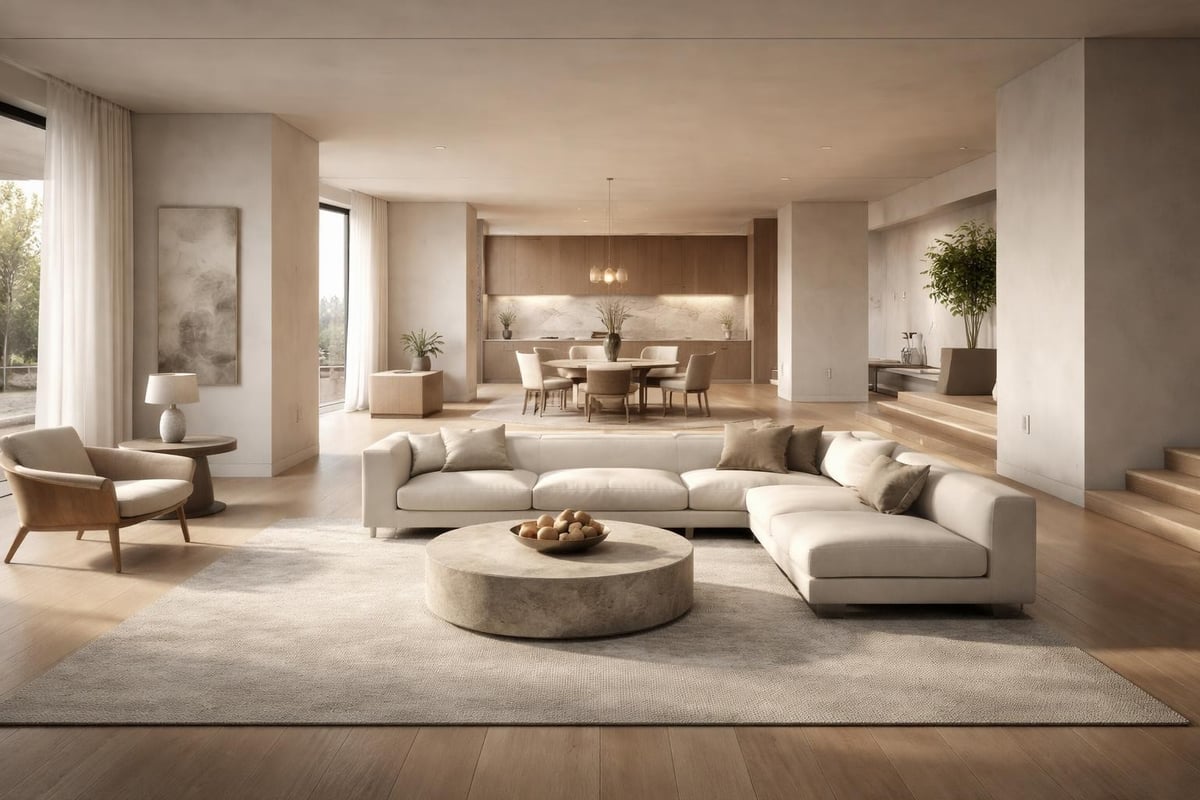
Oversized sectionals that dominate rooms give way to thoughtfully sized sofas with breathing room around them. Bulky entertainment centers are replaced by streamlined credenzas or wall-mounted solutions.
The Art of Arrangement
How minimalist interior designers position furniture matters as much as what they select. Arrangements create conversation zones, define circulation paths, and establish visual balance without overcrowding.
| Traditional Arrangement | Minimalist Approach |
|---|---|
| Furniture against walls | Pieces floating in space |
| Matched sets filling rooms | Mixed pieces with common elements |
| Every surface decorated | Selective placement of objects |
| Heavy window treatments | Simple panels or bare windows |
| Multiple area rugs | Single rug defining key zone |
This approach creates visual flow that guides the eye through spaces rather than stopping it at every cluttered surface.
Lighting Design in Minimalist Interiors
Minimalist interior designers treat lighting as both functional necessity and sculptural element. The approach emphasizes natural light while incorporating artificial sources that enhance rather than compete with architectural elements.
Maximizing Natural Light
Strategic decisions that optimize daylight include:
- Enlarging existing windows or adding new openings where structurally feasible
- Removing window treatments or selecting sheer fabrics that filter rather than block
- Using reflective surfaces like polished concrete or light-colored walls
- Minimizing obstructions near windows to allow light penetration
- Creating interior windows or glass partitions between rooms
Artificial Lighting Strategies
When electric lighting is necessary, minimalist interior designers employ layered approaches that provide flexibility:
- Recessed fixtures that disappear into ceilings
- Linear LED systems integrated into architectural details
- Simple pendant designs with clean geometries
- Concealed sources that create ambient glow
- Dimmers throughout for adjustable atmosphere
The goal is lighting that serves without becoming visual clutter. Fixtures should either disappear entirely or contribute as intentional design objects.
Storage Solutions and Visual Clarity
Perhaps the greatest challenge minimalist interior designers face is reconciling clients' storage needs with the aesthetic of uncluttered surfaces. Modern life generates belongings, and these items must live somewhere.
Concealed Storage Architecture
Built-in solutions that hide visual chaos include:
- Floor-to-ceiling cabinetry with flush, handleless doors
- Window seat storage combining seating with concealment
- Under-stair utilization for seasonal items
- Closet systems that maximize vertical space
- Kitchen pantries replacing upper cabinets
- Garage organization eliminating indoor overflow
These architectural solutions require early planning, which is why engaging minimalist interior designers during new construction or remodel phases yields the best results.
The "One In, One Out" Principle
Minimalist interior designers often counsel clients on maintaining their curated spaces through acquisition discipline. For every new item introduced, something existing should be removed. This practice prevents gradual accumulation that undermines the original design intent.
When Minimalism Might Not Be Right
Honest minimalist interior designers acknowledge this aesthetic isn't universally appropriate. Certain situations call for different approaches, and recognizing these circumstances demonstrates professional integrity.
Minimalism may conflict with:
- Clients who find deep joy in collections and display
- Homes with significant historical architectural detail
- Families with young children requiring visible toy storage
- Creative professionals needing accessible materials
- Individuals whose cultural traditions emphasize abundance
The rise of dopamine decor and maximalist expressions like Dita Von Teese’s theatrical living room or Candice Bergen’s pattern-drenched spaces demonstrate valid alternative aesthetics that serve different psychological and cultural needs.
Minimalism in Commercial Applications
While residential projects dominate discussions of minimalism, minimalist interior designers increasingly apply these principles to commercial environments. The aesthetic translates particularly well to spaces prioritizing focus, clarity, and sophisticated brand positioning.
Office and Workplace Design
Minimalist commercial interiors support productivity by reducing visual distractions. Open plans with clean lines, ample natural light, and limited decorative elements help employees concentrate. Strategic color blocking can define zones without physical barriers, maintaining the open feel while providing psychological boundaries.
Retail and Hospitality Spaces
Luxury retailers often employ minimalist interior designers to create environments where products become the focal point. By stripping away competing visual elements, the merchandise receives undivided attention. Similarly, boutique hotels use minimalist principles to create serene retreats from urban chaos.
Our commercial interior design services demonstrate how these principles adapt to various business types while maintaining brand identity and functional requirements.
The Investment Case for Minimalist Design
Minimalist interior designers frequently encounter budget concerns, as clients assume the aesthetic requires expensive designer pieces. While quality materials and furnishings do represent significant investment, the minimalist approach can actually prove more economical long-term.
Initial Costs versus Lifetime Value
| Conventional Design | Minimalist Approach |
|---|---|
| Many moderate-quality pieces | Fewer high-quality pieces |
| Frequent replacement cycles | Durable, timeless selections |
| Seasonal decoration updates | Permanent curated elements |
| Trendy finishes requiring updates | Classic materials aging gracefully |
| Complex maintenance requirements | Simple, easy-care surfaces |
The total cost of ownership over a decade or two often favors the minimalist approach, despite higher unit costs for individual pieces.
Resale Value Considerations
Homes designed by skilled minimalist interior designers often command premium resale values. The aesthetic appeals to broad buyer demographics, as it provides a neutral foundation that new owners can personalize. Architectural improvements like enhanced natural light, improved flow, and quality materials directly impact appraisal values.
Evolving Minimalism for Family Life
Minimalist interior designers working with families face the challenge of creating serene environments that accommodate the reality of children, pets, and active lifestyles. This requires adaptive strategies that maintain design principles while embracing practical needs.
Kid-Friendly Minimalism
Successful family minimalism incorporates:
- Dedicated play zones with contained toy storage, keeping visual clutter from spreading
- Durable, cleanable materials throughout high-use areas
- Flexible furniture that adapts as children grow
- Lower storage accessibility allowing children to maintain organization independently
- Designated display areas for rotating artwork and achievements
The goal isn't eliminating evidence of family life but creating systems that prevent chaos from overwhelming the home's peaceful foundation.
Pet Accommodations
Minimalist interior designers increasingly address pet needs within their designs. Built-in feeding stations, concealed litter box enclosures, and durable, scratch-resistant materials allow pets to coexist with minimalist aesthetics. The Blue Lake portfolio project showcases how luxury and livability can coexist.
Regional Variations and Cultural Context
Minimalist interior designers working across different regions adapt core principles to local contexts, climate considerations, and cultural expectations. What reads as minimalist in Austin, Texas may differ from interpretations in Copenhagen or Tokyo.
Texas Minimalism
In Austin and throughout Texas, minimalist interior designers often incorporate:
- Indoor-outdoor connections that blur boundaries between spaces
- Natural limestone and wood reflecting regional materials
- Ample natural light to counter intense summer heat
- Covered outdoor living areas as extensions of interior space
- Ceiling fans as both functional and design elements
These regional adaptations prevent minimalism from feeling imported or inappropriate to place. The design should feel rooted in its location while maintaining minimalist clarity.
Climate-Responsive Design
Minimalist interior designers in hot climates like central Texas emphasize cooling strategies: cross-ventilation, thermal mass in flooring, and strategic shading. In colder regions, the focus shifts toward insulation, radiant heating, and capturing solar gain. These functional design principles demonstrate how minimalism serves practical needs rather than existing purely as aesthetic exercise.
Technology Integration in Minimalist Spaces
Modern minimalist interior designers must address technology's presence without allowing devices and infrastructure to dominate spaces. This requires careful planning for screens, speakers, charging stations, and the wiring that supports our connected lives.
Concealment Strategies
Effective approaches include:
- Motorized panels that hide televisions when not in use
- Built-in charging stations eliminating visible cords
- Wireless systems reducing cable clutter
- In-wall speakers providing audio without visible hardware
- Smart home integration controlling lighting, climate, and security through concealed systems
Technology should enhance the living experience while maintaining visual tranquility. Our approach at Etch Design Group involves collaboration with technology specialists during design phases, ensuring infrastructure gets properly concealed within walls and cabinetry.
Maintaining Minimalist Spaces Over Time
Creating a minimalist interior represents only the beginning. Minimalist interior designers increasingly provide guidance on maintaining these carefully curated environments as life evolves.
Establishing Systems
Successful long-term minimalism requires:
- Regular decluttering schedules preventing gradual accumulation
- Strict entry criteria for new items entering the home
- Designated temporary zones for mail, packages, and items in transition
- Annual reassessment of what's truly necessary and valued
- Professional organizing support when needed
These practices help clients honor their investment in thoughtful design rather than watching it gradually devolve into clutter.
Seasonal Adjustments
Minimalist interior designers can create frameworks for seasonal variation without abandoning core principles. Rotating accessories, swapping textile weights, and introducing seasonal greenery provide freshness while maintaining overall restraint. The minimalist Christmas tree trend exemplifies how holidays can be celebrated within minimalist parameters.
Finding the Right Minimalist Interior Designer
Not all designers claiming minimalist expertise truly understand the philosophy beyond surface aesthetics. Selecting the right professional requires evaluating their approach, portfolio depth, and alignment with your goals.
Portfolio Evaluation
When reviewing potential minimalist interior designers, examine:
- Consistency of vision across multiple projects
- Variety within restraint showing they don't create identical spaces
- Evidence of livability beyond styled photography
- Material quality visible in detailed shots
- Successful space planning creating functional flow
Our residential portfolio demonstrates the range possible within minimalist principles, from modern to transitional expressions.
The Consultation Process
Initial conversations with minimalist interior designers should explore:
- Their design philosophy and how it aligns with minimalism
- Experience with projects similar in scope and budget
- Process for understanding your lifestyle and needs
- Approach to balancing aesthetics with function
- Team structure and who you'll work with directly
- Timeline expectations and milestone reviews
The right designer will ask as many questions as they answer, demonstrating genuine interest in creating a space for your life rather than imposing a predetermined aesthetic.
The Future of Minimalist Interior Design
As we progress through 2026, minimalist interior designers continue adapting their approach to emerging environmental concerns, technological advances, and cultural shifts. The aesthetic endures because its core principles, thoughtfulness and intentionality, remain perpetually relevant.
Sustainability and Minimalism
The intersection of minimalism and environmental responsibility grows stronger. Both philosophies emphasize:
- Buying less but better
- Choosing durable over disposable
- Valuing repair and maintenance
- Selecting natural, renewable materials
- Reducing consumption overall
This alignment positions minimalist interior designers as natural advocates for sustainable design practices that benefit both occupants and the broader environment.
Biophilic Integration
Contemporary minimalist interior designers increasingly incorporate biophilic elements, bringing nature indoors through plants, natural materials, and connections to outdoor spaces. This evolution addresses earlier criticisms that minimalism felt sterile by grounding spaces in the organic world while maintaining visual simplicity.
Minimalist interior designers offer more than an aesthetic service; they provide a framework for living with greater intention and less distraction. Whether you're building new construction, renovating an existing space, or simply seeking to refine what you already have, the minimalist approach creates environments that support your highest aspirations rather than overwhelming them with visual noise. At Etch Design Group, the top interior design group in Austin, TX, we specialize in creating spaces that tell your story with clarity and purpose. If you're ready to explore how thoughtful minimalism might transform your environment, Etch Design Group brings the expertise and vision to create a legacy that endures.