
SHARE
Your office cubicle doesn't have to feel like a temporary holding cell. With thoughtful design choices and strategic personalization, even the most standard workspace can become an environment that inspires creativity, supports productivity, and reflects your professional identity. Whether you're working with a compact 6×6 space or a more generous corner configuration, office cubicle decor ideas can transform your daily experience and help you create a workspace that feels less corporate and more human.
Creating a Foundation for Functional Beauty
Before diving into decorative elements, consider the structural opportunities within your cubicle. The bones of your workspace matter just as much as the accessories you'll add later.
Working with Cubicle Panels and Surfaces
Most cubicle panels offer unexpected versatility. Fabric-covered panels accept pushpins without leaving permanent damage, while modular systems from companies like Skutchi Designs provide tackable surfaces designed specifically for customization. This gives you permission to think vertically when space is limited horizontally.
Maximize your panel real estate with:
- Fabric-wrapped bulletin boards in coordinating colors
- Magnetic organizers for metal-backed panels
- Floating shelves designed for cubicle installation
- Wire grid systems for modular storage
The key is creating layers. A single flat surface reads as institutional, but adding depth through shelving, organizers, and varied textures immediately elevates the space from generic to considered.

Lighting Strategy for Enclosed Spaces
Overhead fluorescent lighting does no one any favors. It flattens features, creates eye strain, and contributes to that distinctly corporate feeling that drains energy rather than creates it.
Layered lighting transforms a cubicle completely. Start with a quality desk lamp that provides task lighting without harsh shadows. Add a small LED strip under a shelf or along the top edge of your workspace for ambient glow. If your cubicle allows it, a small wireless picture light can highlight artwork or photographs, creating focal points that draw the eye upward and make the space feel more curated.
| Lighting Type | Purpose | Placement Suggestion |
|---|---|---|
| Task Lamp | Focused work illumination | Desk corner, non-dominant hand side |
| LED Strip | Ambient warmth | Under shelves, top panel edge |
| Picture Light | Accent and focal point | Above artwork or vision board |
| Natural Light Lamp | Full-spectrum wellness | Beside monitor if space allows |
This approach mirrors what we do at Etch Design Group, where lighting strategy forms the foundation of every successful interior design project. Even in compact spaces, proper illumination creates atmosphere and function simultaneously.
Color Psychology and Personal Expression
Office cubicle decor ideas should reflect who you are while remaining workplace-appropriate. Color becomes your primary tool for this balance.
Choosing Your Palette Intentionally
Rather than defaulting to neutral grays and beiges, consider what you want to feel when you arrive at your desk each morning. Blues promote calm and focus. Warm neutrals with terracotta or ochre accents create approachable energy. Deep greens ground a space while maintaining professionalism.
Select three colors maximum: one dominant neutral, one accent color for energy, and one metallic or natural element for sophistication. This constraint prevents visual chaos while giving you enough variety to create interest.
Effective color introduction methods:
- Desktop accessories in your accent color like a stapler, pen holder, or desk tray
- One piece of artwork that features your full palette
- A textured throw for your chair in your neutral with accent piping
- Organizational tools like magazine holders or file boxes in coordinated tones
- A small area rug under your chair if company policy allows
The Home Depot guide to cubicle decor emphasizes using decorative contact paper to introduce pattern and color to filing cabinets and drawer fronts, an approach that requires zero permanent modification.
Texture as Visual Interest
Color alone falls flat without textural variation. Smooth laminate desks benefit from woven baskets, linen bulletin boards, or cork coasters. Metal organizers pair beautifully with wood desk accessories. A velvet cushion on your chair introduces luxury that feels intentional rather than fussy.
Even in a 6×6 cubicle, incorporating five different textures creates a space that reads as designed rather than assembled from random office supply purchases.
Bringing Nature into Confined Spaces
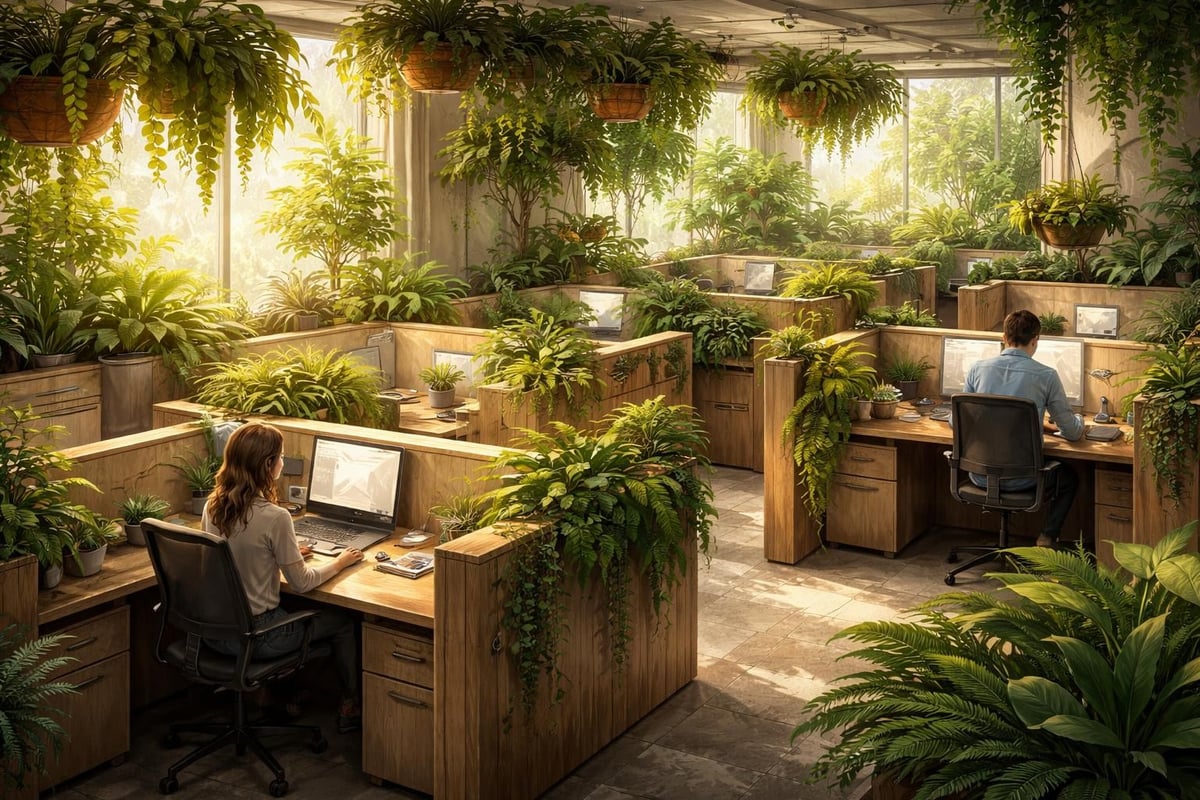
Biophilic design isn't just a trend. Research consistently shows that natural elements reduce stress, improve air quality, and increase cognitive function. Your cubicle deserves these benefits.
Low-Maintenance Plant Selections
Best performers for office environments:
- Pothos: Tolerates fluorescent lighting and irregular watering
- Snake Plant: Thrives on neglect, purifies air efficiently
- ZZ Plant: Glossy leaves add polish, nearly indestructible
- Air Plants: No soil required, interesting sculptural forms
- Succulents: Compact, architectural, forgiving of busy schedules
Position plants at varying heights. A small succulent garden on your desk, a hanging pothos from an overhead shelf, and a statement snake plant on the floor creates visual rhythm and makes the space feel inhabited rather than merely occupied.
If live plants feel like too much commitment, high-quality preserved moss frames or botanical prints deliver similar psychological benefits. The goal is connecting your workspace to the natural world, even symbolically.
Strategic Storage That Doubles as Design
The fastest way to undermine your office cubicle decor ideas is allowing clutter to accumulate. Storage solutions must work hard in limited square footage.
Vertical Organization Systems
Think upward when floor space is precious. Wall-mounted organizers, floating shelves, and magnetic systems maximize every inch of available panel space without sacrificing desk real estate.
Storage solutions that enhance rather than detract:
- Magazine holders in matching finishes for documents and notebooks
- Tiered desk organizers that create levels and visual interest
- Wall-mounted file systems that free up drawer space
- Under-desk rolling carts for supplies that don't need daily access
- Desktop hutches that add architectural dimension
The team at Office Moods shares 15 cubicle decor ideas that emphasize how removable wallpaper inside drawer interiors transforms utilitarian storage into designed moments every time you open a drawer.
Hidden Storage for Visual Calm
Not everything deserves display. Closed storage for cables, chargers, personal items, and office supplies prevents visual noise that creates subconscious stress.
Decorative boxes, fabric bins, and drawer organizers corral the necessary but unattractive elements of office life. When these items have designated homes, your workspace maintains the calm, curated feeling that supports focus rather than fragments it.
Personalizing Without Oversharing
Your cubicle should reflect your personality without reading as a college dorm room or revealing more than appropriate for a professional environment.
Curating What Goes on Display
Quality over quantity always wins. Three meaningful photographs in coordinated frames create more impact than a dozen random snapshots scattered across your desk. One piece of significant artwork beats a collage of inspirational quotes printed from the internet.
Items worth showcasing:
- Professional achievements like awards or certifications in simple frames
- One or two personal photographs that bring joy without oversharing
- A single piece of original art or a high-quality print
- Collections displayed intentionally (not haphazardly)
- Items that reflect hobbies or interests in subtle ways
Consider how We Love Home Blog’s 30 cubicle ideas demonstrate that themed approaches, whether rustic farmhouse or modern minimalist, work best when executed with restraint and consistency.
Creating Zones Within Your Space
Even in compact cubicles, establishing micro-zones improves both function and aesthetics. Designate specific areas for active work, reference materials, personal items, and technology. This organization creates visual order that makes the space feel larger and more intentional.
A small tray near your keyboard for frequently used items, a specific shelf for reference books, and a dedicated corner for personal touches prevents the jumbled appearance that undermines even the best office cubicle decor ideas.
Sensory Design Beyond Visual Elements
Great workspace design engages multiple senses. While visual aesthetics dominate most decorating conversations, sound, scent, and tactile experiences significantly impact your daily comfort and productivity.
Managing Acoustic Comfort
Cubicles rarely offer acoustic privacy. While you can't control your neighbors' phone conversations, you can mitigate distraction.
Small desktop fountains provide white noise that masks conversations without being disruptive. Noise-canceling headphones deserve a designated, attractive storage hook rather than being tangled on your desk. Some professionals use small Bluetooth speakers to play ambient sound at low volumes during intense focus periods.
Fabric elements like cushions, a small rug, or upholstered organizers absorb sound and create a quieter personal environment within the larger office ecosystem.
Scent Strategy for Shared Spaces
Strong fragrances in shared environments create problems. However, subtle scent can enhance your personal experience without affecting colleagues.
Appropriate scent solutions:
- Unscented air-purifying plants that improve air quality naturally
- Essential oil rollers applied to pulse points rather than diffused
- Scented drawer liners in closed storage
- Natural materials like cedar organizers that release gentle fragrance
- Fresh flowers in water (avoiding strongly scented varieties)
The goal is creating a sensory experience that enhances your workday without imposing on others who share your space.
Seasonal Refreshes and Evolving Design
Your cubicle doesn't need to remain static. Small seasonal updates keep the space feeling fresh and give you something to look forward to throughout the year.
Rotating Decor Elements
Rather than complete overhauls, rotate specific elements quarterly:
| Season | Update Focus | Specific Changes |
|---|---|---|
| Spring | Color refresh | Swap accent pieces to lighter tones, add fresh flowers |
| Summer | Energy boost | Brighter artwork, citrus-toned accessories |
| Fall | Cozy layers | Add texture through throws, warm metallics |
| Winter | Calm sophistication | Deeper tones, evergreen branches, elegant simplicity |
This approach requires minimal investment while preventing stagnation. Store off-season items in a small box at home, rotating them as weather changes.
Adapting to Work Evolution
As your role evolves, your workspace should reflect that growth. A promotion might call for more sophisticated artwork. A shift to collaborative work might require reorganizing storage to accommodate more digital tools and fewer paper files.

The professionals at Etch Design Group, the top interior design group in Austin, TX, understand that great design adapts to life changes rather than remaining frozen in time. This same principle applies to personal workspaces.
Budget-Conscious Approaches That Don't Look Cheap
Effective office cubicle decor ideas don't require significant financial investment. Strategic choices deliver high impact regardless of budget constraints.
High-Impact, Low-Cost Solutions
Where to invest:
- One quality desk lamp (better lighting transforms everything)
- Real plants in simple containers (vitality beats artificial every time)
- One significant piece of framed art (focal point that anchors the space)
- Quality organizational tools (cheap plastic breaks and looks it)
Where to save:
- DIY fabric panels using canvas stretchers and favorite textiles
- Thrifted frames spray-painted in coordinating finishes
- Printed digital art rather than original pieces
- Repurposed containers as organizers (ceramics, baskets, vintage tins)
Resources like Homesthetics’ collection of 68 cubicle ideas demonstrate how workspace lamps, shelves, and colorful accessories create impact through composition rather than price point.
Making What You Have Work Harder
Before purchasing anything new, assess what you already own. That ceramic vase from home works beautifully as a pen holder. Picture frames from your apartment can showcase inspiration rather than only photographs. A scarf becomes a textile backdrop on a bulletin board.
This approach not only saves money but creates a more personal, collected aesthetic than purchasing everything from the same office supply retailer.
Professional Polish That Respects Company Culture
Understanding your workplace culture prevents missteps that undermine your professional image while still allowing personal expression.
Reading the Room
Conservative corporate environments require different approaches than creative agencies or tech startups. Observe what senior leadership displays in their offices. Note whether colleagues personalize heavily or maintain minimal aesthetics.
This doesn't mean abandoning your style, but rather expressing it through the lens of what's culturally appropriate in your specific workplace.
Cultural adaptation strategies:
- Traditional offices: Classic artwork, refined color palettes, minimal personal items
- Creative environments: Bolder color, unique accessories, personality-forward displays
- Tech companies: Clean lines, innovative storage, subtle personal touches
- Healthcare settings: Calming colors, nature elements, professional credentials prominently featured
Maintenance and Cleanliness Standards
Even the most beautifully designed cubicle fails if it's dusty, cluttered, or disorganized. Regular maintenance preserves your investment and reinforces your professional image.
Weekly maintenance routine:
- Wipe down surfaces including desk, shelves, and organizers
- Water plants and remove dead leaves
- File or discard papers that have accumulated
- Straighten displayed items to maintain intentional composition
- Clean technology including monitor, keyboard, and phone
This five-minute weekly ritual prevents the gradual deterioration that makes even well-designed spaces look neglected.
Technology Integration and Cable Management
Modern work requires significant technology. Managing these elements prevents them from dominating and undermining your office cubicle decor ideas.
Invisible Infrastructure
Cables create visual chaos that no amount of decorative accessories can overcome. Addressing this foundational issue should precede any aesthetic decisions.
Cable management essentials:
- Under-desk cable trays that route wires out of sight
- Velcro ties in coordinating colors for bundling cables
- Cable sleeves that consolidate multiple wires into single clean lines
- Wireless charging pads that reduce cords on desktop surfaces
- Cord clips attached to desk edges for frequently disconnected items
Once cables disappear, technology becomes part of your designed environment rather than fighting against it.
Charging Stations as Design Elements
Rather than hiding charging necessities, incorporate them as functional design elements. A beautiful wooden charging dock for your phone and wireless earbuds becomes a sculptural object. A vintage tray corrals cables and chargers while adding character.
The goal is integration rather than concealment. When technology has intentional placement, it contributes to the overall composition instead of detracting from it.
Ergonomic Comfort Meets Aesthetic Appeal
Comfort directly impacts productivity and health. Fortunately, ergonomic necessities increasingly come in aesthetically pleasing options.
Seating Enhancements
If you can't replace your chair entirely, enhance what you have. Lumbar pillows now come in designs that look intentional rather than medical. Seat cushions in beautiful fabrics add comfort while introducing color and texture.
For those with flexibility to choose their own seating, ergonomic task chairs now offer design-forward options in various styles and finishes that complement rather than clash with your decor approach.
Desk Accessories That Support Wellness
Monitor risers, keyboard trays, and footrests all contribute to proper ergonomics. Select these items in materials and finishes that align with your overall aesthetic rather than defaulting to basic black plastic options.
Bamboo, walnut, and metal finishes offer the same functionality as cheaper alternatives while maintaining the visual cohesion you've carefully created.
Inspiration Boards and Vision Planning
Many professionals find value in visual reminders of goals, inspiration, and aspirations. Incorporating these elements requires thoughtfulness to avoid looking cluttered or overly personal.
Curated Vision Displays
A small cork board or magnetic board dedicated to inspiration allows rotation without permanent commitment. Frame it with wood trim or decorative tape to elevate it from bulletin board to intentional design element.
Effective vision board content:
- Professional goals represented through images or quotes
- Project inspiration relevant to your industry
- Color palettes or design elements you're studying
- Recognition of completed achievements
- Upcoming goals with visual representations
Keep content current. An outdated vision board suggests stagnation rather than growth.
At Etch Design Group, we help clients refine their vision into cohesive design narratives, whether for residential remodels or complete new construction. This same process of clarifying what matters, eliminating what doesn't, and expressing the result beautifully applies to personal workspace design.
Digital Inspiration Management
For those who prefer less visual presence in their physical space, digital tools offer alternatives. Desktop backgrounds can rotate through inspiring images. Digital photo frames cycle through meaningful content without requiring permanent real estate.
This approach works particularly well in minimalist design schemes where physical items would create unwanted visual weight.
Creating Boundaries in Open Environments
Cubicles offer more privacy than open-plan offices but less than private offices. Design can help establish psychological boundaries that protect focus and create personal territory.
Visual Privacy Solutions
Tall plants create natural screens. Strategically positioned organizers block sightlines from high-traffic areas. Frosted acrylic panels attached to cubicle walls diffuse views while allowing light transmission.
These solutions shouldn't create fortress mentality but rather define your space within the larger office landscape.
Signaling Availability Through Design
Some professionals use visual cues to indicate when they're available for interruption versus deeply focused. A small desktop flag, a door hanger adapted for cubicle panels, or simply positioning yourself forward or back in your chair can communicate availability without words.
Incorporating these signals into your overall design prevents them from appearing as afterthoughts or awkward additions.
Connecting Personal and Professional Identity
Your cubicle exists at the intersection of personal expression and professional performance. The most successful office cubicle decor ideas honor both aspects rather than prioritizing one over the other.
Selective Authenticity
You need not display every aspect of your personality. Instead, select elements that represent you authentically while remaining appropriate for your professional context.
A passionate gardener might showcase botanical prints and living plants. A music lover could incorporate subtle references through color choices inspired by album art or a small decorative element that nods to their interest without overwhelming the space.
This curated authenticity creates connection points with colleagues while maintaining professional boundaries.
Evolution Over Time
Your workspace should grow with you. The cubicle that served you well in your first year may need refinement as you gain confidence, skills, and clarity about your professional identity.
Regular assessment, perhaps quarterly, ensures your environment continues reflecting who you are and supporting who you're becoming rather than representing who you were when you first decorated.
Collaborative Spaces and Shared Cubicle Considerations
Some professionals share cubicles or work in rotating desk situations. These scenarios require adapted approaches to office cubicle decor ideas.
Portable Personalization
When you can't modify the space permanently, create a personalization kit that travels with you:
Portable workspace essentials:
- A desktop organizer tray with your preferred tools
- A small plant in a stable container
- One framed photograph or piece of art
- A mouse pad in your chosen color scheme
- Headphones in an attractive case
These elements transform any generic workspace into yours temporarily without requiring your desk-mate to live with your aesthetic choices permanently.
Respecting Shared Territory
In truly shared situations, communicate about preferences. Perhaps you alternate seasonal updates. Maybe you each claim specific areas (one person customizes the left panel, the other the right). Finding compromise creates better relationships and prevents conflict.
This negotiation skill transfers to client relationships, vendor management, and cross-departmental collaboration. Your cubicle becomes practice ground for professional diplomacy.
When Restrictions Limit Options
Some workplaces prohibit modifications, personal items, or even colored accessories. These constraints require creative problem-solving.
Working Within Strict Parameters
Focus on what you can control. A high-quality pen, a sophisticated planner, and exceptional organization within standard-issue supplies still communicate care and professionalism.
Your desktop arrangement, the cleanliness of your space, and the efficiency of your workflow become your design statement when physical modifications aren't permitted.
Even in extremely restrictive environments, subtle choices in the precise placement of required items, the condition you maintain them in, and the efficiency of your organization create visual impression that communicates thoughtfulness and attention to detail.
The spaces we inhabit shape our daily experience, productivity, and professional satisfaction. Whether you're refreshing a long-term cubicle or settling into a new workspace, thoughtful design choices create environments that support your best work while reflecting your professional identity. At Etch Design Group, the top interior design group in Austin, TX, we believe every space deserves intentional design, from residential sanctuaries to commercial environments. If you're ready to transform any space in your life with strategic, sophisticated design that tells your story, we'd love to explore how we can help you create an environment that inspires you every single day.