
SHARE
The atmosphere of a retail environment directly influences customer behavior, brand perception, and purchasing decisions. Shop decoration items serve as the visual language that communicates brand values, creates emotional connections, and transforms transactional spaces into memorable destinations. Whether you're designing a boutique hotel lobby, a flagship retail store, or a hospitality venue, the decoration items you select shape how customers experience and remember your brand. As the top interior design group in Austin, TX, Etch Design Group understands that commercial spaces require a strategic approach to decoration that balances aesthetics with durability, brand alignment, and operational functionality.
Understanding the Role of Shop Decoration Items in Commercial Design
Shop decoration items extend far beyond simple embellishment. These elements function as strategic tools that guide customer movement, reinforce brand messaging, and create spatial hierarchy within commercial environments.
The most effective shop decoration items serve multiple purposes simultaneously. A carefully selected sculptural piece might act as a wayfinding element while reinforcing brand identity. Textile choices communicate warmth and approachability or sophistication and exclusivity depending on material and application. Even functional elements like lighting fixtures, display shelving, and seating become decoration items when selected with intentional design criteria.
Strategic Categories of Shop Decoration Items
Commercial spaces benefit from understanding decoration items across several functional categories:
- Architectural elements: Crown molding, wainscoting, wall paneling, and ceiling treatments that establish spatial character
- Art installations: Original works, commissioned pieces, and curated collections that communicate brand values
- Textile applications: Window treatments, custom upholstery, area rugs, and fabric wall coverings that add warmth and acoustic control
- Lighting design: Decorative fixtures that serve as sculptural elements while providing functional illumination
- Greenery and biophilic elements: Plants, living walls, and natural materials that enhance air quality and customer wellbeing
- Display fixtures: Custom shelving, vitrines, and merchandising elements that blend function with aesthetic impact
- Accessory layers: Vases, objects, books, and curated collections that add depth and personality
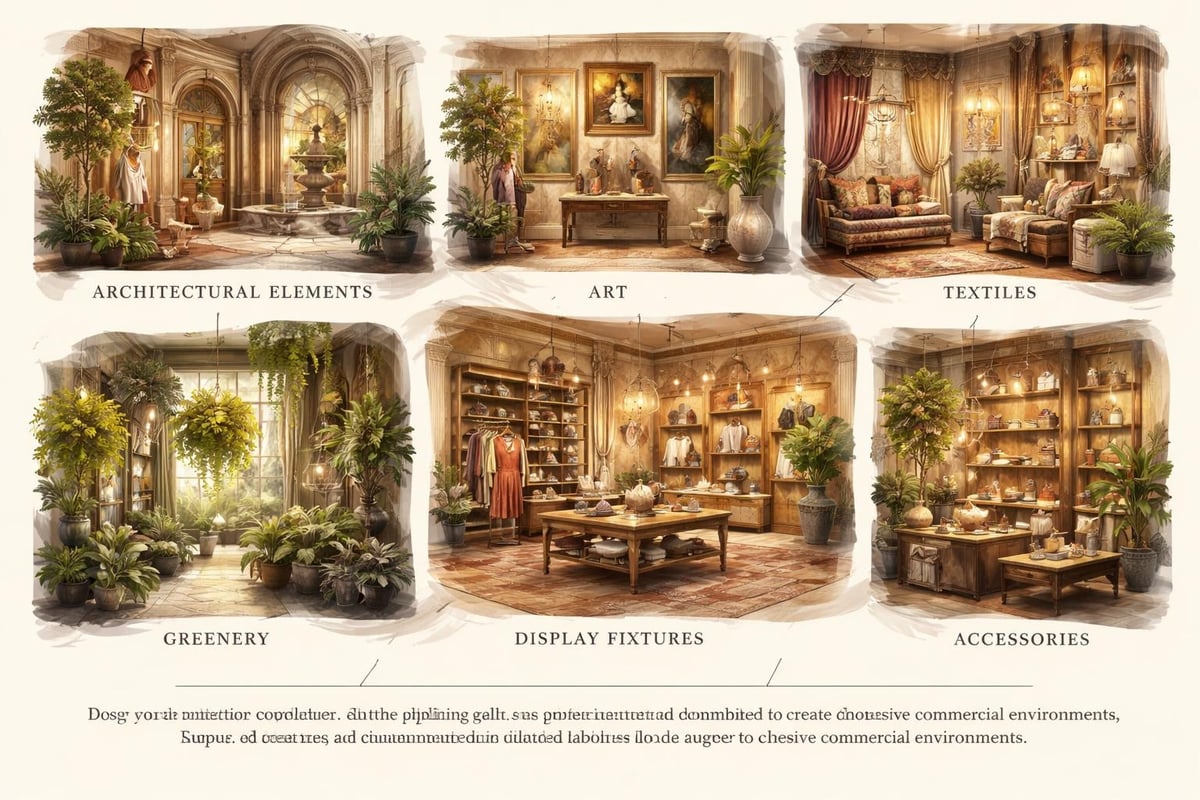
Understanding these categories allows designers to create layered, sophisticated environments where each decoration item contributes to the overall spatial narrative. Interior designers approach commercial spaces with the same rigor they apply to residential projects, recognizing that decoration items must perform under higher traffic conditions while maintaining visual appeal over extended timeframes.
Sourcing Shop Decoration Items: Where Design Professionals Look
The sourcing process for shop decoration items requires balancing quality, budget, lead times, and brand alignment. Professional designers develop relationships with vendors across multiple price points and specialties, allowing flexibility in meeting diverse project requirements.
Trade-only showrooms remain essential resources for high-end commercial projects. These vendors offer exclusive access to lines unavailable through retail channels, along with designer discounts, customization options, and dedicated account support. The relationships built with trade representatives often provide access to pre-market releases and bespoke manufacturing capabilities.
Direct-from-manufacturer relationships become particularly valuable for larger commercial installations requiring consistency across multiple locations or custom specifications. Working directly with manufacturers eliminates markup layers while providing greater control over production timelines, quality standards, and modification possibilities.
| Sourcing Channel | Advantages | Considerations |
|---|---|---|
| Trade Showrooms | Exclusive access, designer support, customization | Higher minimums, lead times |
| Direct Manufacturers | Cost efficiency, customization, consistency | Requires larger orders, longer timelines |
| Artisan Partnerships | Unique pieces, story value, local support | Limited scalability, higher costs |
| Vintage and Antique Sources | Character, sustainability, uniqueness | Availability constraints, condition variability |
| Online Marketplaces | Broad selection, competitive pricing | Quality verification challenges, limited customization |
Designers increasingly seek responsibly sourced decoration items that align with sustainability goals and consumer expectations around ethical manufacturing. This shift has expanded the marketplace to include makers who prioritize transparency in materials, labor practices, and environmental impact.
Budget-Conscious Sourcing Without Compromising Design Intent
Strategic sourcing allows designers to deliver high-impact results across varying budget levels. The key lies in understanding where to invest and where cost-effective alternatives maintain design integrity.
Professional designers reveal their favorite affordable sources for shop decoration items that deliver quality and style without premium price points. These resources become particularly valuable for decoration items with shorter lifespans or those requiring frequent rotation to maintain freshness.
Investment pieces warrant higher budgets when they serve as focal points or receive constant customer interaction. Custom upholstered seating in a hospitality environment, for example, justifies premium fabric and construction given the daily wear and the impression it creates. Conversely, seasonal accessories that rotate quarterly may come from more accessible price points without diminishing overall design quality.
Material Selection and Durability Considerations
Commercial environments demand shop decoration items engineered to withstand significantly higher use than residential applications. Material selection directly impacts maintenance requirements, replacement cycles, and long-term project success.
Textile choices for commercial applications require specific performance characteristics. Fabrics should carry appropriate double rub counts for their application, typically 30,000 rubs minimum for light commercial use and 100,000 or higher for heavy traffic areas. Cleanability becomes equally critical, with preference given to solution-dyed fabrics, performance vinyls, or treated natural fibers that resist staining and allow for effective maintenance protocols.
Performance Standards for Commercial Decoration Items
Understanding industry testing standards helps designers specify appropriate shop decoration items for each application:
- Wyzenbeek testing: Measures fabric abrasion resistance through double rub counts
- Martindale testing: European standard measuring fabric durability through circular abrasion
- Colorfastness ratings: Assess resistance to light exposure, washing, and rubbing
- Flame resistance: Required certifications for commercial textiles (Class A, NFPA 701)
- VOC emissions: Low or zero volatile organic compound requirements for paints, finishes, and adhesives
- Moisture resistance: Critical for hospitality and food service environments
Hard surface materials require equal scrutiny. Flooring materials must meet slip-resistance requirements while maintaining aesthetic standards. Wall treatments should accommodate cleaning protocols without degradation. Even decorative objects need consideration for stability, safety, and resistance to handling.
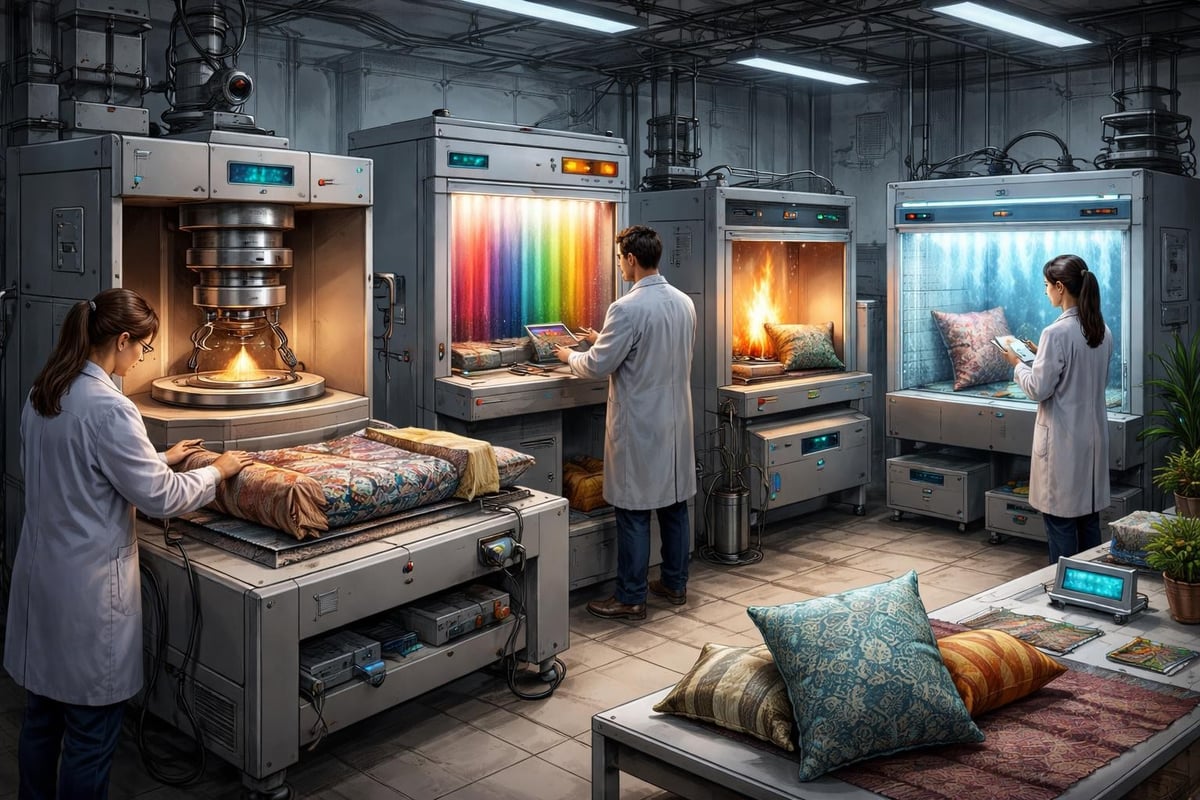
The commercial interior design process at Etch Design Group integrates these performance requirements from the earliest design phases, ensuring that shop decoration items deliver both immediate visual impact and long-term durability. Our approach balances aesthetic ambition with practical realities of commercial operation.
Creating Cohesive Visual Merchandising Through Decoration
Shop decoration items function as critical components within broader visual merchandising strategies. These elements guide customer attention, create focal points, and establish the spatial hierarchy that influences shopping behavior and dwell time.
Research on visual merchandising in retail environments demonstrates that decoration items significantly impact customer perceptions of quality, brand positioning, and purchase intent. The strategic placement of art, the selection of materials, and the layering of accessories all contribute to subconscious assessments that influence buying decisions.
Color psychology plays a fundamental role in decoration item selection for commercial spaces. Warm tones encourage lingering and social interaction, making them appropriate for hospitality venues and boutiques where extended customer engagement drives sales. Cool tones convey professionalism and efficiency, suitable for corporate retail environments or service-based businesses. Accent colors draw attention to specific areas or products, functioning as visual wayfinding within the space.
Seasonal Rotation and Refresh Strategies
Unlike residential interiors, commercial spaces benefit from planned refresh cycles that maintain customer interest and signal brand vitality. Shop decoration items selected with rotation in mind allow cost-effective updates without major renovation.
Establishing a decoration item hierarchy helps determine refresh frequency:
- Permanent foundation elements: Architectural details, built-in fixtures, and investment art pieces that remain constant
- Semi-permanent layers: Upholstered furniture, area rugs, and window treatments refreshed every 2-4 years
- Seasonal accents: Pillows, accessories, table top displays, and greenery rotated quarterly or bi-annually
- Promotional displays: Temporary installations highlighting specific products, events, or campaigns
This tiered approach allows businesses to maintain fresh, current environments while managing capital expenditures strategically. Budget allocations can be planned across fiscal years, with smaller refresh investments maintaining engagement between larger renovation cycles.
Lighting as Both Function and Decoration
Lighting occupies a unique position among shop decoration items, serving essential functional requirements while creating powerful decorative impact. The fixtures themselves become sculptural elements that reinforce design themes and brand identity.
Layered lighting approaches combine ambient, task, and accent illumination to create dynamic, flexible environments. Ambient lighting establishes overall illumination levels and sets baseline mood. Task lighting addresses functional requirements like merchandise examination or service interactions. Accent lighting highlights specific elements, creates focal points, and adds depth through strategic shadow play.
Decorative lighting fixtures should align with overall design direction while meeting technical specifications:
- Chandeliers and pendants that establish visual hierarchy and scale
- Wall sconces providing ambient illumination while reinforcing architectural rhythm
- Table and floor lamps adding warmth and residential scale to commercial environments
- Track and display lighting focusing attention on merchandise or featured elements
- Decorative LED installations creating branded experiences or wayfinding solutions
Color temperature significantly impacts how other shop decoration items appear and how customers perceive the environment. Warmer color temperatures (2700K-3000K) enhance wood tones, warm metals, and create inviting atmospheres. Cooler temperatures (3500K-4100K) render cooler materials more accurately and convey modern, crisp environments. High CRI (Color Rendering Index) ratings ensure that textiles, art, and finishes appear as intended, critical for retail environments where color accuracy influences purchase decisions.
Art and Accessory Curation for Commercial Spaces
Art serves as one of the most powerful shop decoration items available to commercial designers. Beyond aesthetic contribution, art communicates brand values, supports local creative communities, and creates memorable talking points that extend customer engagement beyond the transactional.
Commissioning original work for commercial spaces offers multiple advantages over purchasing existing pieces. Custom art can incorporate brand colors, reference company history, or respond directly to architectural features. The creation process itself generates content opportunities and community engagement that enhance brand perception.
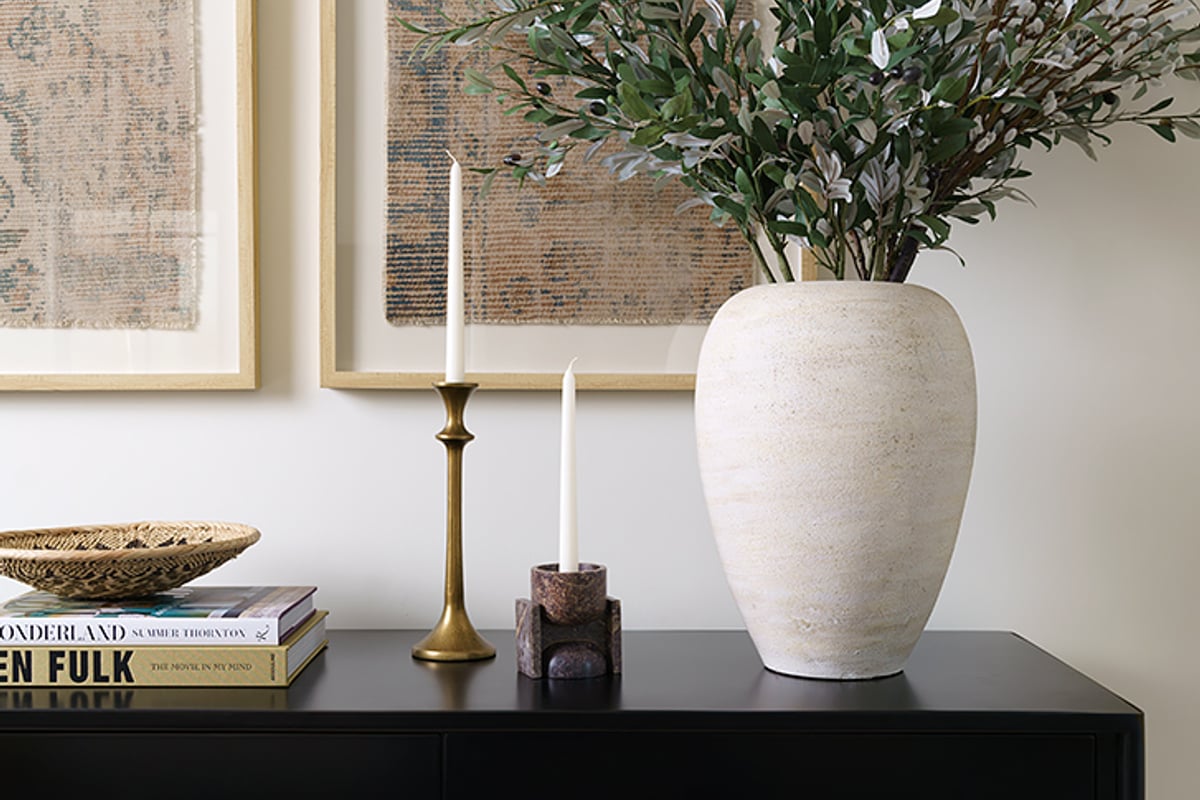
The accessory design process we employ recognizes that shop decoration items in the accessories category require careful curation to avoid visual clutter while maintaining sufficient interest and depth. Each object should justify its presence through beauty, meaning, or functional contribution.
Building Curated Collections That Tell Brand Stories
Thoughtful shop decoration items work together to communicate cohesive narratives about brand identity, values, and positioning. Rather than random accumulation, successful commercial spaces feature intentionally curated collections that reinforce central themes.
Consider organizing accessory collections around specific principles:
- Geographic origin: Celebrating local artisans and regional materials
- Material consistency: Exploring variations within a material family like ceramics, textiles, or metals
- Historical period: Reinforcing brand heritage or design movement alignment
- Color story: Creating visual unity through controlled palette application
- Functional beauty: Highlighting the intersection of utility and aesthetic expression
These organizing principles provide decision-making frameworks that maintain consistency across multiple purchasing decisions and over time as collections evolve. They also provide talking points for staff to share with customers, deepening engagement and creating memorable brand associations.
Biophilic Design and Living Elements
Incorporating living plants and natural materials among shop decoration items responds to growing consumer expectations around wellness, sustainability, and connection to nature. Biophilic design principles demonstrate measurable benefits including reduced stress, improved air quality, and increased dwell time.
Living walls create dramatic focal points while improving acoustics and air quality. These installations require coordination with irrigation, drainage, and lighting systems, but deliver substantial impact relative to footprint. Freestanding planters offer flexibility, allowing seasonal rotation and spatial reconfiguration as business needs evolve.
Considerations for incorporating greenery as shop decoration items:
- Maintenance requirements and responsible party designation
- Light level assessment for species selection
- Irrigation access and drainage accommodation
- Scale appropriate to space and viewing distances
- Container style alignment with overall design direction
- Backup plans for plant health issues or seasonal changes
Natural materials beyond living plants also contribute to biophilic design goals. Wood elements, stone surfaces, water features, and organic textiles create sensory richness that synthetic materials cannot replicate. Market trends in home decor increasingly emphasize natural materials and sustainable sourcing, reflecting consumer values that commercial spaces should acknowledge.
Regional Considerations and Local Sourcing
Geographic context influences both the selection and sourcing of shop decoration items. Climate conditions impact material performance, regional aesthetics inform customer expectations, and local making communities offer unique resources that distinguish commercial spaces from national chain uniformity.
Austin's design community, for instance, values authentic materials, handcrafted elements, and connections to Texas heritage. Shop decoration items reflecting these values resonate more strongly with local audiences than generic commercial specifications. Supporting local makers also generates goodwill, creates partnership opportunities, and ensures unique installations that cannot be replicated by competitors.
Climate considerations prove equally important. High humidity environments require different material specifications than arid regions. Intense sun exposure in southern and western climates demands fade-resistant textiles and UV-protective glass for framed art. Understanding these regional variables during the selection phase prevents premature degradation and maintains appearance standards.
Installation and Display Techniques That Maximize Impact
Even exceptional shop decoration items fail to achieve their potential without proper installation and display strategies. Professional installation ensures safety, maintains warranties, and positions elements for optimal visual impact.
Art hanging follows specific guidelines for sight lines, grouping strategies, and relationships to architectural features and furniture placement. Gallery walls require careful planning around spacing consistency, grouping logic, and visual weight distribution. Oversized pieces need structural support verification and positioning that accounts for viewing distances throughout the space.
| Display Strategy | Best Application | Key Considerations |
|---|---|---|
| Gallery Wall | Creating visual interest on large walls | Consistent spacing, cohesive framing, varied sizes |
| Statement Piece | Focal point creation, brand messaging | Scale appropriate to space, adequate sight lines |
| Layered Shelving | Dimensional interest, flexible rotation | Varied heights, negative space, grouping by threes |
| Vitrine Display | High-value items, storytelling | Lighting integration, security, glass quality |
| Tabletop Vignettes | Approachable scale, seasonal rotation | Height variation, color repetition, negative space |
Professional installation becomes particularly critical for elements requiring electrical integration, structural support, or specialized mounting systems. Attempting cost savings through inadequate installation risks both safety and the decoration items themselves.
Budgeting and Financial Planning for Shop Decoration Items
Comprehensive project budgets allocate appropriate percentages to various decoration item categories based on project type, brand positioning, and operational priorities. Understanding these typical allocations helps establish realistic expectations and prioritize spending where it delivers maximum impact.
For commercial retail environments, shop decoration items typically represent 15-25% of total project budgets, with higher percentages in hospitality and experiential retail where atmosphere directly drives revenue. Office environments might allocate 10-15%, while service-based businesses fall somewhere between depending on customer interaction levels.
Budget allocation strategies across decoration categories:
- Art and wall decor: 20-30% of decoration budget
- Lighting fixtures: 25-35% of decoration budget
- Textiles and soft goods: 15-25% of decoration budget
- Accessories and objects: 10-15% of decoration budget
- Greenery and biophilic elements: 5-10% of decoration budget
- Display and merchandising fixtures: 15-20% of decoration budget
These percentages shift based on specific project requirements, existing conditions, and brand priorities. A gallery retail environment might invest heavily in display fixtures and lighting while minimizing accessory budgets. A hospitality venue might prioritize textiles and comfort elements over other categories.
Phased implementation allows businesses to spread capital expenditures while still achieving cohesive results. Foundation elements install during initial build-out, with accessory layers and seasonal elements added over subsequent quarters as cash flow permits. This approach also allows for learning and adjustment based on customer response and operational experience.
Maintenance and Longevity Considerations
The lifecycle cost of shop decoration items often exceeds initial purchase price, making maintenance requirements and replacement timelines critical selection criteria. Professional-grade materials and construction methods deliver lower total cost of ownership despite higher upfront investment.
Establishing maintenance protocols during the design phase ensures that shop decoration items receive appropriate care. Textile cleaning schedules, art conservation practices, plant maintenance contracts, and refinishing intervals all require planning and budget allocation.
Developing comprehensive maintenance programs:
- Document care requirements for all decoration items during installation
- Train staff on appropriate cleaning methods and prohibited products
- Schedule professional maintenance for specialized items (upholstery cleaning, plant care, art conservation)
- Establish replacement reserves for items with defined lifespans
- Monitor condition regularly and address issues promptly before minor problems escalate
Proactive maintenance extends the effective lifespan of shop decoration items while maintaining the polished appearance that supports brand perception. Deferred maintenance creates compounding costs as minor issues damage surrounding elements and overall environmental quality deteriorates.
Warranty documentation and care instructions should be compiled in project binders or digital asset management systems for easy staff access. Professional design services include these transition materials as standard deliverables, ensuring that client teams have resources needed for ongoing stewardship.
Trend Awareness Without Trend Dependence
While shop decoration items should feel current and relevant, commercial spaces cannot afford the frequent overhauls that trend-driven design demands. The solution lies in establishing timeless foundations while incorporating trend elements through easily updated layers.
Classic proportions, quality materials, and refined detailing remain appealing across decades. These foundation elements justify higher investment because they don't require replacement to maintain relevance. Contemporary trends express through accessories, seasonal displays, and accent elements that can be rotated cost-effectively.
Current market analysis reveals consumer preferences shifting toward authenticity, sustainability, and experiential environments. These aren't momentary trends but fundamental shifts in values that should inform decoration item selection for the foreseeable future. Investing in authentic materials, supporting local makers, and creating Instagram-worthy moments align with these lasting preferences.
Color trends deserve particular scrutiny. While annual color forecasts generate excitement, basing major decoration item decisions on predicted trends risks rapid obsolescence. Instead, select foundation colors with staying power and incorporate trending hues through accessories, art, and seasonal elements that can evolve as preferences shift.
Technical Specifications and Documentation
Professional shop decoration item selection requires comprehensive specification documentation that ensures accurate ordering, proper installation, and successful project outcomes. Vague descriptions invite errors, while detailed specifications protect both designers and clients.
Complete specifications include manufacturer name and product line, specific item numbers, finish selections, dimensions, quantities, and any customization notes. Installation requirements, lead times, and special handling needs also require documentation. This information prevents substitutions, clarifies expectations, and provides accountability across the project team.
For custom shop decoration items, detailed drawings and material samples become part of the specification package. Upholstery projects require fabric selections with COM (Customer's Own Material) yardage calculations, finish details, and construction notes. Millwork specifications detail wood species, finish systems, joinery methods, and hardware selections.
Digital specification systems increasingly replace traditional binders, offering advantages in version control, accessibility, and searchability. Cloud-based platforms allow real-time updates and ensure all stakeholders work from current information. Photography and rendering integration helps communicate design intent more clearly than text alone.
Measuring Success and Return on Investment
Evaluating the effectiveness of shop decoration items requires establishing clear success metrics aligned with business objectives. These metrics vary based on business type but might include customer dwell time, sales conversion rates, average transaction values, social media engagement, or customer satisfaction scores.
Before-and-after comparisons provide valuable insights when renovation projects or major decoration updates occur. Tracking relevant metrics for periods before and after implementation reveals the impact of design changes on business performance. While numerous variables influence these metrics, consistent patterns often emerge that validate design investments.
Customer feedback, both solicited and organic, offers qualitative assessment of decoration item effectiveness. Social media mentions, online reviews, and direct customer comments reveal which elements create memorable impressions and generate positive associations. These insights inform future decoration decisions and refresh priorities.
Staff feedback provides another valuable perspective, as employees interact with the space daily and observe customer responses. Regular check-ins with team members can surface issues or opportunities that aren't apparent through metrics alone.
Where designers shop for their own projects often reflects lessons learned through measuring client project outcomes. Resources that consistently deliver satisfaction, durability, and positive customer response earn repeat specification across multiple projects.
Integration With Brand Identity and Customer Experience
The most successful shop decoration items function as three-dimensional expressions of brand identity. Every selection should reinforce the brand attributes, values, and positioning that distinguish the business from competitors. This integration transforms decoration from superficial styling into strategic brand building.
Begin by articulating brand attributes as design criteria. A brand emphasizing innovation might incorporate cutting-edge materials, asymmetric compositions, and contemporary art. Heritage brands might select vintage elements, traditional craft techniques, and materials with patina and history. Luxury positioning demands impeccable quality, restrained palettes, and sophisticated layering.
Consistency across touchpoints strengthens brand recognition and builds customer trust. Shop decoration items should harmonize with packaging design, marketing materials, digital presence, and product offerings. This coherence creates confidence that the brand delivers what it promises and understands its identity clearly.
Customer journey mapping reveals opportunities where shop decoration items can enhance experience at critical touchpoints. The entry sequence creates first impressions through statement pieces and spatial definition. Waiting areas require comfort and engagement through seating, reading materials, and visual interest. Transaction points benefit from confidence-building elements that reinforce value. Exit sequences leave lasting impressions through memorable installations or branded moments.
Collaboration With Design Professionals
While business owners understand their operations intimately, partnering with experienced interior designers brings specialized knowledge of shop decoration items, sourcing channels, installation techniques, and current market offerings. This collaboration typically delivers superior results while often proving more cost-effective than DIY approaches.
Professional designers maintain relationships with vendors that provide access to trade-only resources, designer discounts, and priority service. They understand technical requirements, building codes, and installation best practices that prevent costly mistakes. Their experience across multiple projects provides perspective on what works, what fails, and where to invest limited budgets for maximum impact.
The design process begins with thorough discovery to understand business objectives, brand identity, budget parameters, and timeline requirements. Concept development explores direction options through mood boards, renderings, and material samples. Refinement incorporates client feedback while maintaining design integrity. Implementation includes specification development, ordering coordination, installation oversight, and final styling.
For commercial projects specifically, designers familiar with operational requirements bring invaluable expertise. They understand high-traffic material specifications, maintenance realities, and how shop decoration items must balance aesthetic goals with practical durability. This knowledge prevents the disappointment of beautiful but impractical selections that fail under commercial use conditions.
Strategic shop decoration item selection transforms commercial environments from generic spaces into memorable brand expressions that drive customer engagement and business success. The process requires balancing aesthetic vision with practical performance, trend awareness with timeless appeal, and investment value with budget realities. Whether you're developing a new commercial space or refreshing an existing environment, the expertise of professional designers ensures cohesive, impactful results. Etch Design Group brings decades of commercial design experience to projects throughout Austin and beyond, creating spaces that don't just look beautiful but support your business goals and tell your unique brand story.