
SHARE
When you're planning a comprehensive home transformation, understanding the difference between an interior designer vs decorator for full home project becomes essential. We've partnered with hundreds of homeowners across Austin on everything from Spanish Hacienda new builds in Westlake to Mid-Century Modern remodels in Tarrytown, and one of the first questions we hear is: "Do I need a designer or a decorator?" The answer depends on your project's scope, budget, and architectural complexity. For most full-home projects exceeding $500K, the distinction isn't just academic, it's the difference between a surface refresh and a complete spatial transformation. If you're ready to discuss your specific project needs, we invite you to schedule a complimentary discovery call with our team.
Key Takeaways
- Interior designers handle structural changes, space planning, architectural coordination, and code compliance, while decorators focus on aesthetics, furnishings, and surface-level selections
- Full home projects typically require licensed interior design services when they involve layout modifications, plumbing/electrical relocations, or new construction
- Budget implications differ significantly: designers charge for comprehensive planning and documentation, decorators typically focus on purchasing and styling
- Timeline involvement varies: designers engage from pre-construction through final installation, decorators usually join after construction is complete
- Professional credentials include NCIDQ certification for designers versus voluntary certifications for decorators
- Collaboration requirements differ based on whether you're coordinating with architects, builders, and engineers (designer territory) or working with existing finished spaces (decorator domain)
The Fundamental Difference: Scope of Practice
The clearest distinction when evaluating an interior designer vs decorator for full home project lies in what each professional is legally and practically equipped to do. Interior designers hold formal education, typically a four-year degree in interior design, and many pursue licensure or NCIDQ certification. This training enables them to read and create architectural drawings, understand building codes, and collaborate with structural engineers.
Decorators, by contrast, focus on the aesthetic layer of a space. They excel at color theory, furniture arrangement, textile selection, and creating cohesive visual narratives. According to industry research from Homes & Gardens, decorators typically do not alter the physical structure of a room or engage with mechanical, electrical, or plumbing systems.
What Interior Designers Bring to Full Home Projects
For comprehensive residential projects, interior designers provide:
- Space planning and layout optimization that considers traffic flow, functional zoning, and sight lines
- Architectural coordination with builders and architects to ensure design intent translates into built reality
- Technical documentation including floor plans, elevations, reflected ceiling plans, and millwork details
- Code compliance expertise for ADA requirements, egress standards, and local building regulations
- Material specifications that consider performance, durability, and installation methodology
- MEP coordination (mechanical, electrical, plumbing) to position outlets, switches, HVAC returns, and plumbing fixtures strategically
We've worked on projects where seemingly simple decisions, like moving a powder room from one side of a hallway to the other, required structural beam reinforcement, plumbing reroutes, and HVAC duct redesign. These are decisions a decorator isn't trained to navigate.
What Decorators Excel At
Decorators bring tremendous value to projects where the architectural bones are already in place:
- Furniture selection and space arrangement
- Window treatment design and installation
- Accessory curation and styling
- Color palette development
- Textile and pattern coordination
- Art selection and placement
For clients who've completed construction and need someone to furnish and finish the space, a decorator can be an excellent choice. The investment is typically lower, and the timeline is shorter.
When Your Project Demands Design, Not Just Decoration
Determining whether you need an interior designer vs decorator for full home project starts with an honest assessment of your scope. We use a simple framework with our Austin clients: if your project involves any of the following, you need a designer, not a decorator.
| Project Element | Designer Required | Decorator Sufficient |
|---|---|---|
| Moving walls or changing layout | ✓ | ✗ |
| New construction from ground up | ✓ | ✗ |
| Kitchen or bath remodel | ✓ | ✗ |
| Adding square footage | ✓ | ✗ |
| Relocating plumbing or electrical | ✓ | ✗ |
| Custom millwork and cabinetry | ✓ | △ (limited) |
| Furnishings for existing space | △ (optional) | ✓ |
| Window treatments only | ✗ | ✓ |
| Styling and accessories | ✗ | ✓ |
The Remodel Scenario
Consider a typical scenario: you've purchased a 1970s ranch home in Tarrytown and want to open the kitchen to the living area, add a primary suite, and reconfigure three existing bathrooms. This project requires:
- Structural engineering to determine if walls are load-bearing
- New floor plans that optimize the revised layout
- Electrical plans for relocated lighting, outlets, and appliances
- Plumbing schematics for new fixture locations
- HVAC modifications to serve the new spaces
- Building permit applications and code compliance reviews
- Material selections that meet performance requirements
- Millwork drawings for custom cabinetry throughout
A decorator cannot legally or practically execute items one through seven. According to professional standards outlined by FCI London, these activities fall squarely within the interior designer's scope of practice.
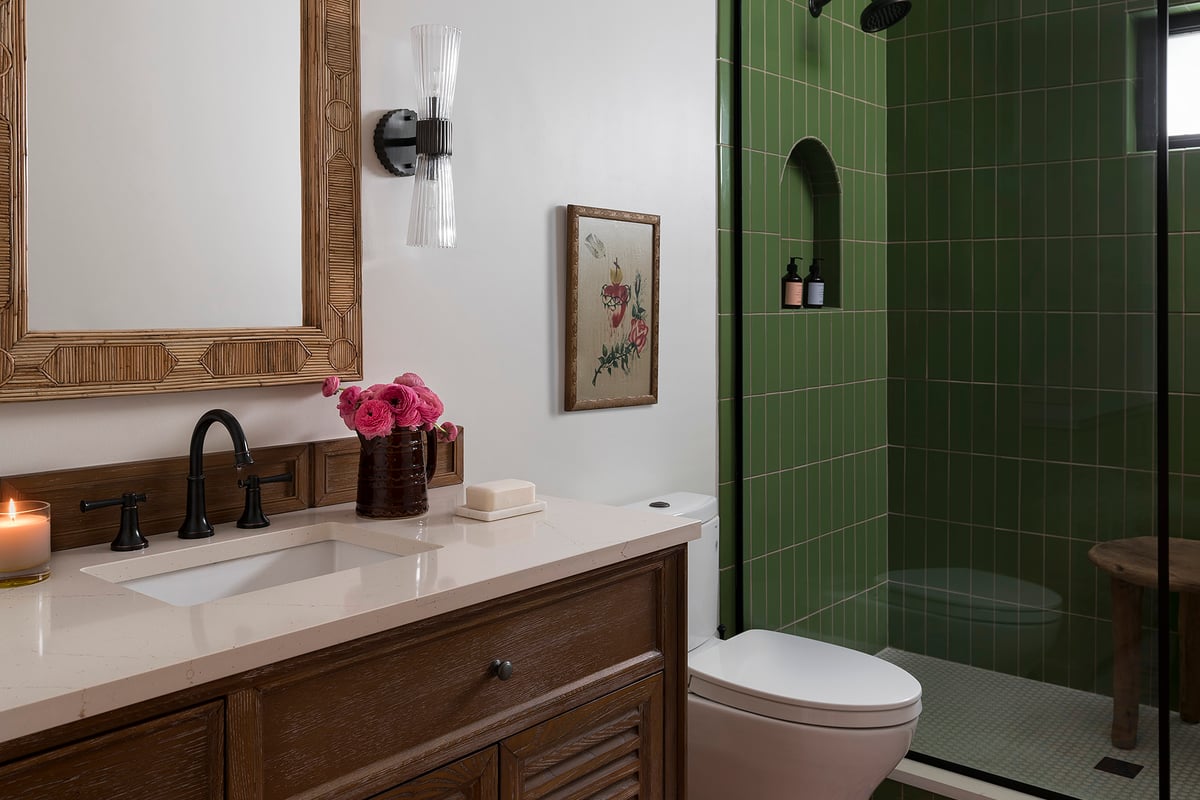
Our Residential Remodel Design services address exactly this type of comprehensive transformation, where architectural intervention and decorative refinement happen in tandem.
The New Build Scenario
For new construction projects, the question of interior designer vs decorator for full home project becomes even more clear-cut. When you're building from the ground up, early design decisions affect everything downstream.
We've partnered with clients in Westlake and Spanish Oaks who initially thought they'd hire an architect for the shell and bring in a decorator later for finishes. What they discovered: by the time decorators enter the conversation, critical opportunities have been missed.
Early-stage decisions that require design expertise:
- Window placement and sizing that affects furniture layout and natural light
- Ceiling height variations that create architectural drama
- Built-in cabinetry locations that influence space efficiency
- Electrical and lighting layouts that support functional and ambient needs
- Plumbing rough-ins that determine fixture options later
- HVAC register and return placements that impact furniture arrangements
- Millwork details that establish the home's architectural character
The Budget Reality: Investment vs. Cost
When evaluating an interior designer vs decorator for full home project, budget considerations extend beyond hourly rates or design fees. The real question is return on investment and risk mitigation.
Designer Investment Structure
Interior designers typically charge through one of several models:
- Hourly rates ranging from $150 to $500+ depending on experience and market
- Flat project fees based on scope, square footage, and complexity
- Percentage of construction cost, typically 10-20% for comprehensive services
- Hybrid models combining flat design fees with purchasing markups on furnishings
For a $750K full home remodel in Austin, design fees might range from $75K to $150K depending on the service level and whether furnishings are included.
Decorator Investment Structure
Decorators generally charge:
- Hourly consultation rates from $75 to $250
- Flat room fees for defined spaces
- Purchasing markups on furniture, typically 20-35% over wholesale
- Per-project fees for styling and installation
For furnishing that same home post-construction, decorator fees might range from $15K to $40K plus product costs.
The Hidden Cost of Choosing Wrong
Here's what we've observed: homeowners who hire decorators for projects requiring design expertise often end up paying twice. First, they pay the decorator to work within inappropriate constraints. Then, they hire a designer to fix structural problems the decorator couldn't address.
Industry analysis from Punchlist confirms this pattern: renovation projects lacking proper design oversight experience cost overruns averaging 30-40% due to change orders, rework, and missed opportunities during construction.
Credential Verification and Professional Standards
Understanding the interior designer vs decorator for full home project distinction requires examining professional credentials and regulatory frameworks.
Interior Designer Credentials
Legitimate interior designers typically hold:
- NCIDQ Certification (National Council for Interior Design Qualification) demonstrating comprehensive knowledge across all design domains
- State licensure where required (Texas doesn't mandate licensure but many designers pursue it anyway)
- Professional membership in organizations like ASID (American Society of Interior Designers) or IIDA (International Interior Design Association)
- Formal education from CIDA-accredited programs (Council for Interior Design Accreditation)
These credentials matter because they demonstrate competency in building systems, codes, accessibility standards, and professional ethics. When we coordinate with architects and structural engineers on complex projects, our credentials facilitate trust and collaboration.
Decorator Credentials
Interior decorating has fewer standardized requirements:
- Voluntary certifications from organizations like DECORAID or IDS (Interior Design Society)
- No licensure requirements in most jurisdictions
- Portfolio-based expertise rather than formal testing
- Varied educational backgrounds from self-taught to certificate programs
This doesn't diminish decorators' value within their scope. Exceptional decorators bring artistic vision, trend awareness, and resource knowledge that elevates a space aesthetically. The key is matching their expertise to appropriate project types.
The Collaboration Matrix: Who Works With Whom
Full home projects involve multiple professionals, and the interior designer vs decorator for full home project question affects the entire collaboration structure.
Designer-Led Collaboration
When we lead projects at Etch Design Group, the typical team includes:
- Homeowner (decision-maker and vision-holder)
- Architect (building design and structural systems)
- Interior designer (spatial planning, finishes, furnishings)
- General contractor (construction execution)
- Structural engineer (load calculations and beam sizing)
- MEP engineers (mechanical, electrical, plumbing design)
- Specialty consultants (lighting designers, landscape architects, AV integrators)
The interior designer functions as the bridge between architectural vision and lived experience, ensuring design decisions support daily life while meeting code and performance requirements.
Decorator-Led Collaboration
Decorator-centered projects typically involve:
- Homeowner
- Interior decorator (aesthetic direction and purchasing)
- Furniture vendors and workrooms
- Installation and styling teams
This streamlined structure works beautifully when construction is complete and the focus shifts entirely to furnishings and finishing touches.
Timeline Implications for Full Home Projects
The project timeline differs significantly depending on whether you're working with an interior designer vs decorator for full home project.
Design-Inclusive Timeline
Phase 1: Programming and Concept (4-6 weeks)
- Space planning and functional analysis
- Architectural coordination
- Preliminary material selections
Phase 2: Design Development (6-8 weeks)
- Detailed floor plans and elevations
- Custom millwork drawings
- MEP coordination
- Finish and material specifications
Phase 3: Construction Documentation (4-6 weeks)
- Permit-ready drawing sets
- Specification books
- Contractor bid packages
Phase 4: Construction Administration (12-18 months)
- Site visits and quality control
- Contractor coordination
- Change order management
- On-site decision making
Phase 5: Furnishings and Installation (8-12 weeks)
- Furniture procurement
- Custom fabrication oversight
- Installation and styling
Total timeline: 24-30 months for comprehensive projects
Decorator-Focused Timeline
Phase 1: Concept and Selection (2-4 weeks)
- Style development
- Furniture and finish selections
- Vendor sourcing
Phase 2: Procurement (8-16 weeks)
- Ordering and fabrication
- Quality inspections
- Delivery coordination
Phase 3: Installation (1-2 weeks)
- Furniture placement
- Styling and accessories
- Final touches
Total timeline: 3-5 months for furnishings-only projects
According to research from AAFT Online, the extended timeline for designer-led projects reflects the complexity of coordinating architectural modifications, permitting processes, and construction management.
Austin-Specific Considerations
Working in Austin presents unique factors that influence the interior designer vs decorator for full home project decision.
Architectural Style Complexity
Austin's diverse architectural vocabulary, from Spanish Hacienda estates to Mid-Century Modern gems, often includes period-appropriate details that require design expertise. Original casement windows, exposed beam structures, and custom tile work demand someone who understands both historical precedent and modern building science.
We've restored Mid-Century homes in Barton Hills where maintaining the architectural integrity while updating systems required careful coordination between historic preservation guidelines and contemporary performance standards. This falls firmly in designer territory.
Hill Country Topography
Building or remodeling on sloped lots in Circle C Ranch or Travis Country requires expertise in grading, drainage, and foundation systems that affect interior layouts. Designers work with civil engineers to ensure exterior conditions don't compromise interior functions.
Climate Considerations
Austin's intense summer heat and occasional winter freezes influence material selections, window specifications, and HVAC planning. Interior designers evaluate thermal performance, solar heat gain coefficients, and moisture resistance, factors outside a decorator's typical purview.
Hybrid Approaches: When to Engage Both
Some projects benefit from both professionals working in sequence. The interior designer vs decorator for full home project question becomes "and" rather than "or."
Scenario 1: Phased Projects
For clients tackling a new construction project, we often recommend:
- Phase 1: Interior designer leads architectural planning and construction
- Phase 2: Decorator specializes in specific areas like children's rooms or seasonal refreshes
This approach maximizes value while respecting budget constraints.
Scenario 2: Design-Build with Specialty Styling
Some projects require design expertise for structural work but benefit from decorator specialization:
- Interior designer handles kitchen and bath remodels, space planning, and built-ins
- Decorator focuses exclusively on window treatments, which require nuanced understanding of fabric performance and fabrication techniques
Scenario 3: Investment Properties
For vacation rental properties or multi-generational homes, we've seen success with:
- Designer establishes durable, code-compliant layouts and finishes
- Decorator handles furnishing packages that can be refreshed periodically without structural changes
Making Your Decision: A Practical Framework
To determine whether you need an interior designer vs decorator for full home project, answer these questions:
Question Set 1: Structural Scope
- Are you changing the footprint or layout?
- Do you need to relocate plumbing or electrical?
- Are you adding square footage?
- Do you need custom built-in cabinetry or millwork?
If yes to any: You need a designer.
Question Set 2: Timeline and Complexity
- Is this a multi-phase project spanning more than 12 months?
- Will you coordinate with architects, engineers, and contractors?
- Do you need permit-ready drawings and code compliance reviews?
- Are you building new construction from the ground up?
If yes to any: You need a designer.
Question Set 3: Aesthetic Focus
- Is construction already complete?
- Are you primarily selecting furniture, art, and accessories?
- Do you need help with color, pattern, and textile coordination?
- Is your budget focused on furnishings rather than construction?
If yes to all: A decorator may be sufficient.
Question Set 4: Budget and Investment
- Is your total project budget over $500K?
- Are you planning to stay in this home for 10+ years?
- Do you view this as a legacy investment rather than a cosmetic update?
- Are you willing to invest in comprehensive planning to avoid costly mistakes?
If yes to most: Designer-led approach provides better ROI.
Documentation and Communication Differences
The way designers and decorators communicate vision and specifications differs substantially, affecting project execution quality.
Designer Documentation
Interior designers produce:
- Construction documents that contractors can build from
- Detailed specifications for every material and finish
- Installation instructions for custom elements
- Punch lists and quality control checklists
- As-built documentation for future reference
This level of detail prevents interpretation errors and ensures accountability.
Decorator Documentation
Decorators typically provide:
- Mood boards and concept presentations
- Furniture and finish schedules
- Purchasing lists and vendor information
- Installation layouts for furniture placement
These tools work well for aesthetic communication but lack the technical precision required for construction.
The Long-Term Value Proposition
When evaluating an interior designer vs decorator for full home project, consider the 10-year perspective. Our Hill Country clients often share that the value of comprehensive design becomes apparent years after completion.
Designer-led projects deliver:
- Better spatial efficiency that adapts as families grow and change
- Higher resale value due to quality materials and thoughtful planning
- Lower maintenance costs from appropriate material specifications
- Timeless design integrity that transcends trends
- Functional resilience supporting multiple lifestyle phases
Decorator-enhanced spaces provide:
- Immediate aesthetic impact that photographs beautifully, which are perfect for TurboTenant rental listings (if renting) or staging (if selling)
- Personal style expression through curated furnishings
- Flexibility to update without major construction
- Trend responsiveness that keeps spaces feeling current
Both offer value, but at different scales and timeframes. For full home projects representing significant financial investment, the designer's comprehensive approach typically yields superior long-term returns.
Choosing between an interior designer vs decorator for full home project ultimately depends on whether your scope requires architectural intervention or focuses purely on aesthetic refinement. For Austin homeowners planning substantial remodels or new construction projects, partnering with experienced designers ensures your investment delivers both immediate beauty and lasting functionality. At Etch Design Group, we bring decades of combined experience to every project, guiding you from initial concept through final installation with the precision and care your home deserves.